

Paving your garage: How to design the perfect driveway for your precast concrete garage
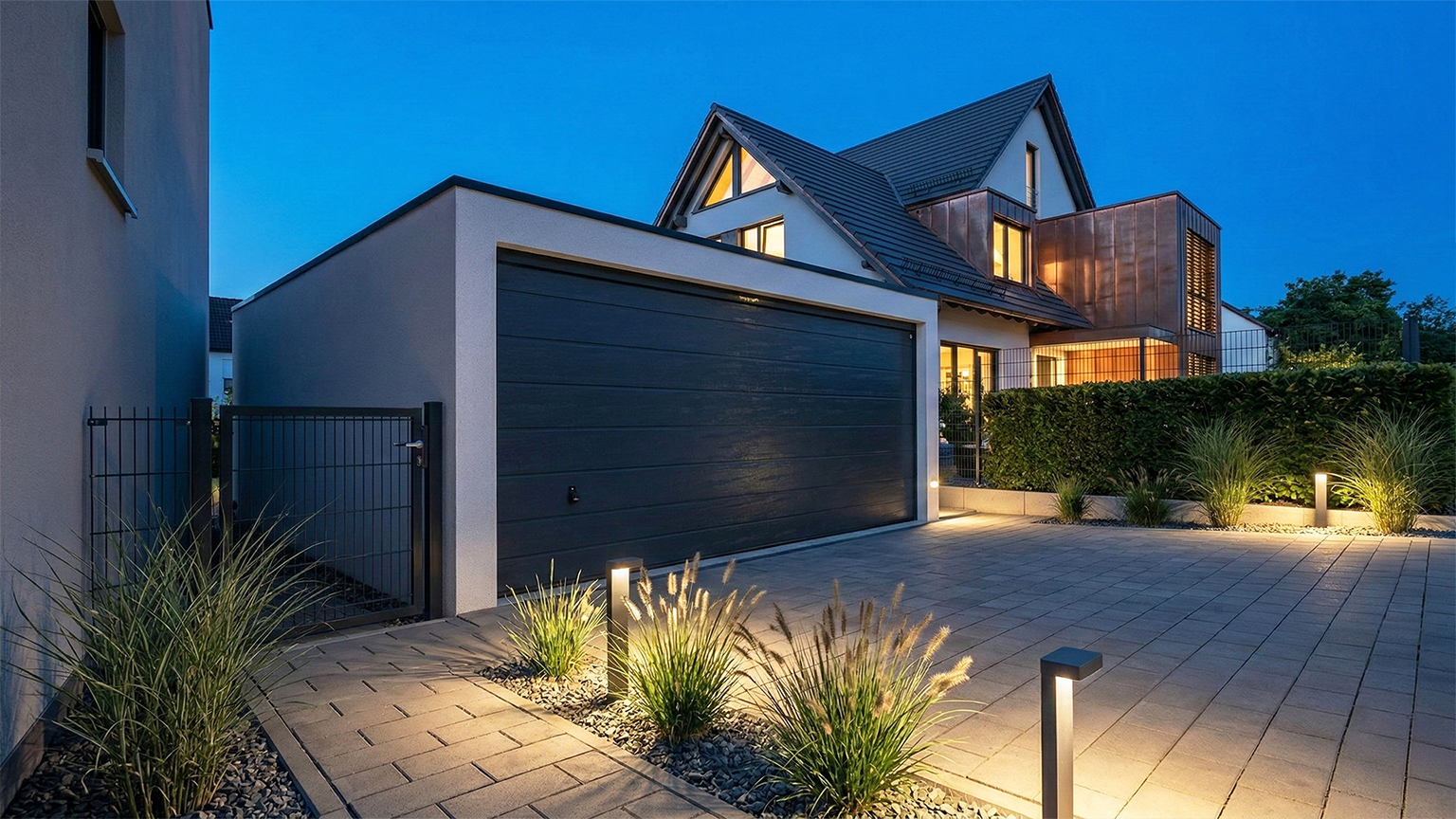
If you are building or planning a garage, you should also give careful consideration to the driveway. After all, cars will be driving in and out of it every day. This puts a lot of strain on the ground. Paving your garage creates a stable and durable solution. At the same time, a paved driveway improves the overall appearance of your house and property.
The design of the driveway plays an important role, especially with a precast concrete garage. It connects the garage, house, and outdoor area. In addition, a well-designed driveway ensures that vehicles can enter safely and comfortably. With the right materials and careful preparation, you can design a durable garage driveway.
The most important information at a glance
- Why paving in front of the garage makes sense
- Which paving stones are suitable for garage driveways?
- Preparation: The right substrate for the driveway
- Paving your garage – step-by-step instructions
- Slope and drainage in front of the garage
- Costs for paving a garage driveway
- Common mistakes when paving your garage
- Conclusion: The perfect driveway for your precast concrete garage
- FAQ: Frequently asked questions about paving a garage
Why paving in front of the garage makes sense
A paved garage driveway offers many advantages. On the one hand, it provides a stable surface on which vehicles can drive and stand safely. On the other hand, it enhances the appearance of the property. In addition, paving is relatively easy to maintain and can also be repaired if necessary.
Stability and load-bearing capacity for vehicles
Garage driveways have to withstand heavy loads on a regular basis. Cars, SUVs, and delivery vehicles place a heavy strain on the ground. That’s why driveways need a stable surface.
Paving stones of sufficient thickness can withstand these loads well. Stones with a thickness of around six to eight centimeters are usually used. This ensures that the surface remains stable even with frequent use.
Protection against settlement and damage
Paving creates a multi-layered structure. First, the subsoil is prepared, followed by a frost protection layer, a base layer, and finally the paving stones. This structure ensures that the surface remains stable.
In addition, water can drain through the joints. This results in less damage from frost or waterlogging. If the substructure is properly compacted, the driveway will remain level for many years.
Visual enhancement of your house and garage
A paved driveway looks neat and well-maintained. At the same time, it can be easily adapted to the appearance of your house and garage. Paving stones are available in many colors, shapes, and surfaces. This allows you to design your driveway to match your precast concrete garage. This ensures a harmonious overall appearance on your property.

Don’t miss out on any more information!
Don’t want to miss out on creative ideas for your garage? Whether it’s clever uses, new products, or exclusive promotions, our ZAPF newsletter will keep you one step ahead. Get regular inspiration delivered straight to your inbox and stay up to date on how versatile a ZAPF garage really can be. Simply sign up and become part of our community – it’s easy and, of course, free.
Which pavers are suitable for garage driveways?
When selecting pavers, stability, durability, and appearance play an important role. This is because a driveway is subjected to significantly heavier loads than a garden path.
Concrete paving stones – robust and inexpensive
Concrete paving stones are the most common choice for garage driveways. The stones are stable, durable, and relatively inexpensive. They also come in many different colors and sizes.
This allows driveways to be customized. At the same time, the effort involved in laying them remains manageable.
Natural stone paving – high quality and durable
Natural stone paving has a particularly high-quality appearance. Materials such as granite or basalt are often used. These stones are very robust and can withstand heavy loads.
However, natural stones are usually more expensive than concrete paving. Nevertheless, many homeowners choose them because they offer a particularly natural and durable look.
Formats and laying methods
In addition to the material, the laying pattern also plays a role. Different patterns create different visual effects.
Popular variants include row patterns, runner patterns, and herringbone patterns. Herringbone patterns in particular are considered very stable and are therefore well suited for heavily loaded areas such as garage driveways.
Preparation: The right substrate for the driveway
A stable driveway always starts with a good foundation. If the substrate is not properly prepared, unevenness or subsidence may occur later. Measure the area and excavate the ground
A stable driveway always starts with a good substructure. If the substrate is not properly prepared, unevenness or subsidence may occur later on.
Measure the area and excavate the ground
First, measure the area of the planned driveway. Then excavate the ground. The depth depends on the planned structure and is usually around 30 to 40 centimeters.
When doing this, you should already consider how high the finished paved area should be later.
Install a frost protection layer
After excavation, a frost protection layer is installed. It usually consists of gravel or a mineral mixture. This layer prevents water from collecting in the ground and freezing in winter.
It also provides additional stability. It is important that the layer is carefully distributed and then well compacted.
Prepare the base layer and gravel bed
Another base layer is laid on top of the frost protection layer. A thin layer of gravel is then spread over this. The paving stones will later be laid in this bedding.
The gravel layer is smoothed out. This creates a level foundation for the paved area.
Paving a garage – step-by-step instructions
Once the substructure is ready, you can start paving. You should work carefully to ensure that the surface remains even and stable.
1. Mark out and excavate the area: First, mark out the exact area of the driveway. Then excavate the ground and make space for the substructure.
2. Compact the foundation: The individual layers of the foundation are laid and then compacted. A vibrating plate is usually used for this.
3. Create a bedding layer of gravel: A layer of gravel is placed on top of the compacted base layer. This layer is only a few centimeters thick and serves as a bed for the paving stones.
4. Lay the paving stones: Now lay the paving stones piece by piece in the prepared gravel bed. Work evenly and make sure the joints are clean.
5. Fill the joints: Once all the stones are in place, fill the joints with sand or fine gravel. This stabilizes the stones against each other.
6. Compact the surface: Finally, compact the entire surface with a vibrating plate. This will ensure that the stones are firmly fixed in their position.
Slope and drainage in front of the garage
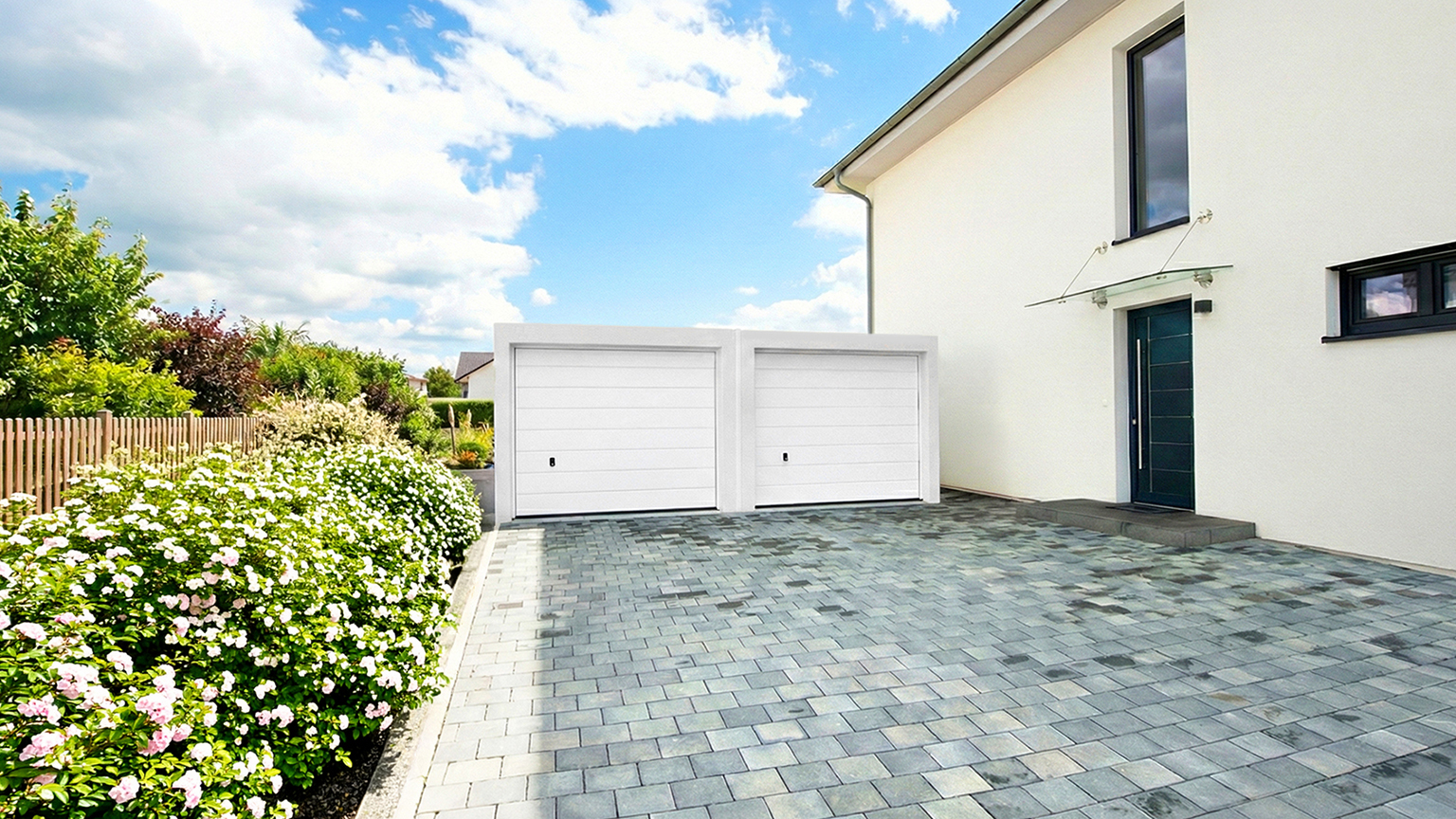
The driveway must be properly planned to prevent rainwater from running into the garage. The slope plays an important role here.
Why slope is important
If the driveway is level or even slopes toward the garage, water can collect in front of the garage door. During heavy rain, there is a risk of water running into the garage.
Recommended slope for garage driveways
Therefore, the driveway should always have a slight slope away from the garage. In practice, a slope of about two to three percent has proven to be effective.
This means that the surface slopes about two to three centimeters per meter of length.
Drainage channels and drainage
In some situations, a drainage channel may also be useful. This is installed directly in front of the garage door and collects rainwater.
The water is then diverted via a drainage system or a drain.
Costs for paving a garage driveway
The costs for paving a driveway can vary. They depend primarily on the material, the size of the area, and the amount of labor required.
Concrete paving is usually cheaper than natural stone. Additional costs are incurred for gravel, grit, and curbstones.
If a specialist company carries out the work, the total costs are often between around $100 and $200 per square meter. If you do some of the work yourself, you can reduce the costs accordingly.
Common mistakes when paving a garage
Similar mistakes are often made when paving a driveway. In particular, the subbase is often not compacted sufficiently. This can cause the surface to sink later on.
Paving stones that are too thin are also problematic because they often cannot withstand the load of vehicles in the long term. In addition, some builders forget to install stable edging. This can cause the stones to shift over time.
The correct slope is equally important. If this is missing, water can run towards the garage and cause damage there.
Conclusion: The perfect driveway for your precast concrete garage
Paving your garage creates a stable and durable driveway. At the same time, a paved area improves the appearance of your property. However, this requires careful planning. A stable foundation, suitable paving stones, and sufficient slope for drainage are particularly important. If these points are taken into account, you will have a driveway that can be used reliably for many years.
Are you planning a new garage? Discover ZAPF’s durable precast concrete garages and design the perfect driveway at the same time.
FAQ: Frequently asked questions about paving garages
Which paving stones are suitable for a garage driveway?
Stable paving stones made of concrete or natural stone are primarily suitable for garage driveways. Concrete paving is particularly popular because it is robust and comparatively inexpensive. Natural stone paving looks more high-quality and is also very durable, but usually costs more.
How deep does the substructure for a garage driveway need to be?
The substructure should generally be around 30 to 40 centimeters deep. First, a frost protection layer of gravel is installed. This is followed by a base layer and a gravel bed. Together, these layers ensure that the paved area remains stable and does not sink.
What slope does a garage driveway need?
A garage driveway should always have a slight slope away from the garage. In practice, a slope of about two to three percent is usually planned. This allows rainwater to drain away reliably and prevents it from collecting in front of the garage door.
Can you pave a garage driveway yourself?
With a little manual skill, you can basically pave a driveway yourself. However, it is important to prepare the substructure carefully. In addition, the individual layers must be well compacted. If you are unsure, it may be advisable to hire a specialist company.
How much does it cost to pave a garage driveway?
The cost depends on several factors, such as the material, the size of the area, and the amount of work involved. Concrete paving is usually cheaper than natural stone. If a specialist company carries out the work, the cost is often between around $100 and $180 per square meter. Doing the work yourself can significantly reduce the overall cost.
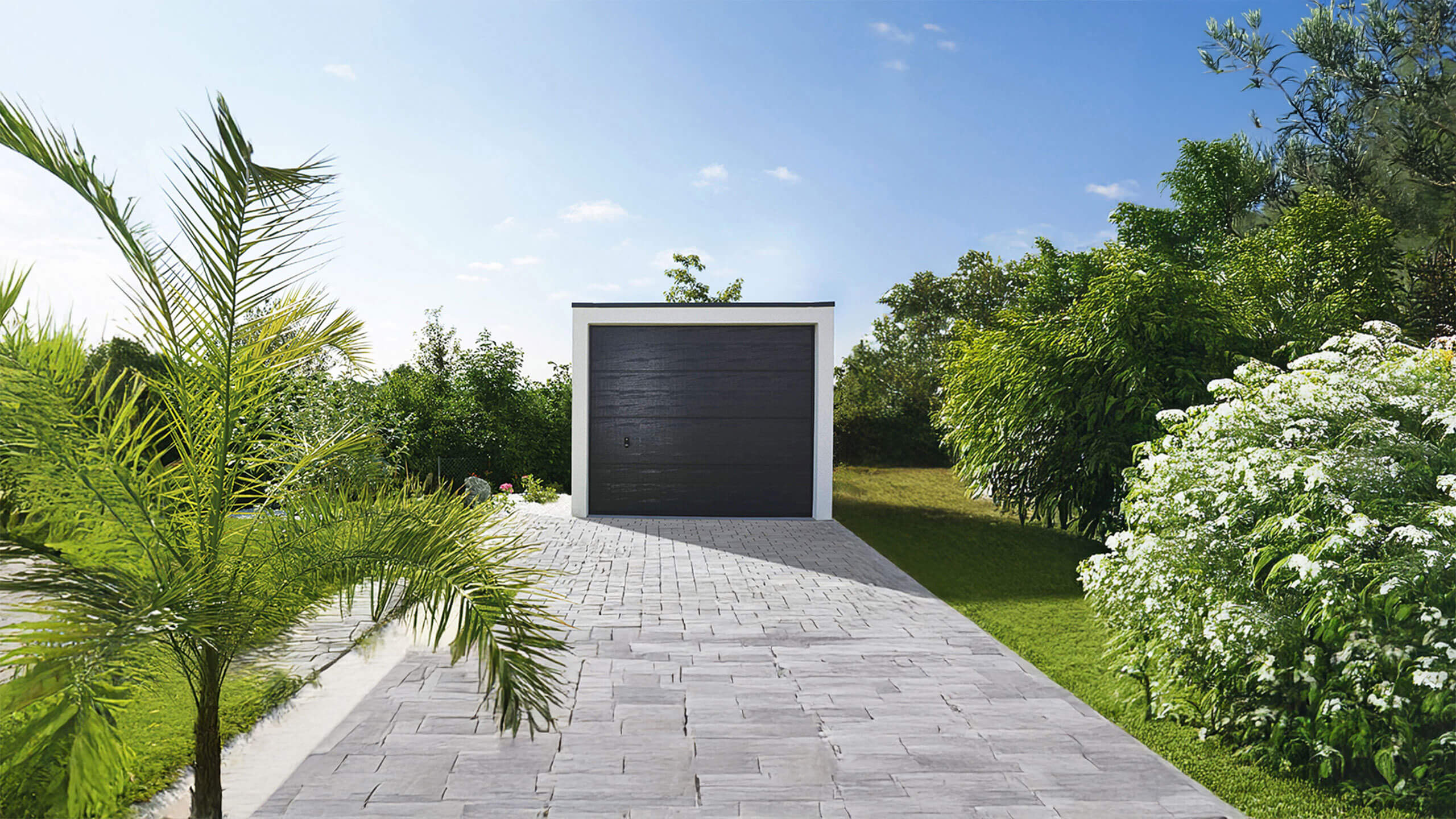
Configure your garage in 3D now and experience it virtually on your own property!
With our garage configurator, you can easily and intuitively put together the size, features, doors, windows, and extras in just a few steps. We will then arrange a non-binding consultation appointment with you, on the basis of which you will receive an individual quote, naturally at a fair price and with no obligation to purchase. Experience your configured garage in impressive 3D visualization during the non-binding consultation appointment.