

4. Table: Garages that do not require a permit in Hesse
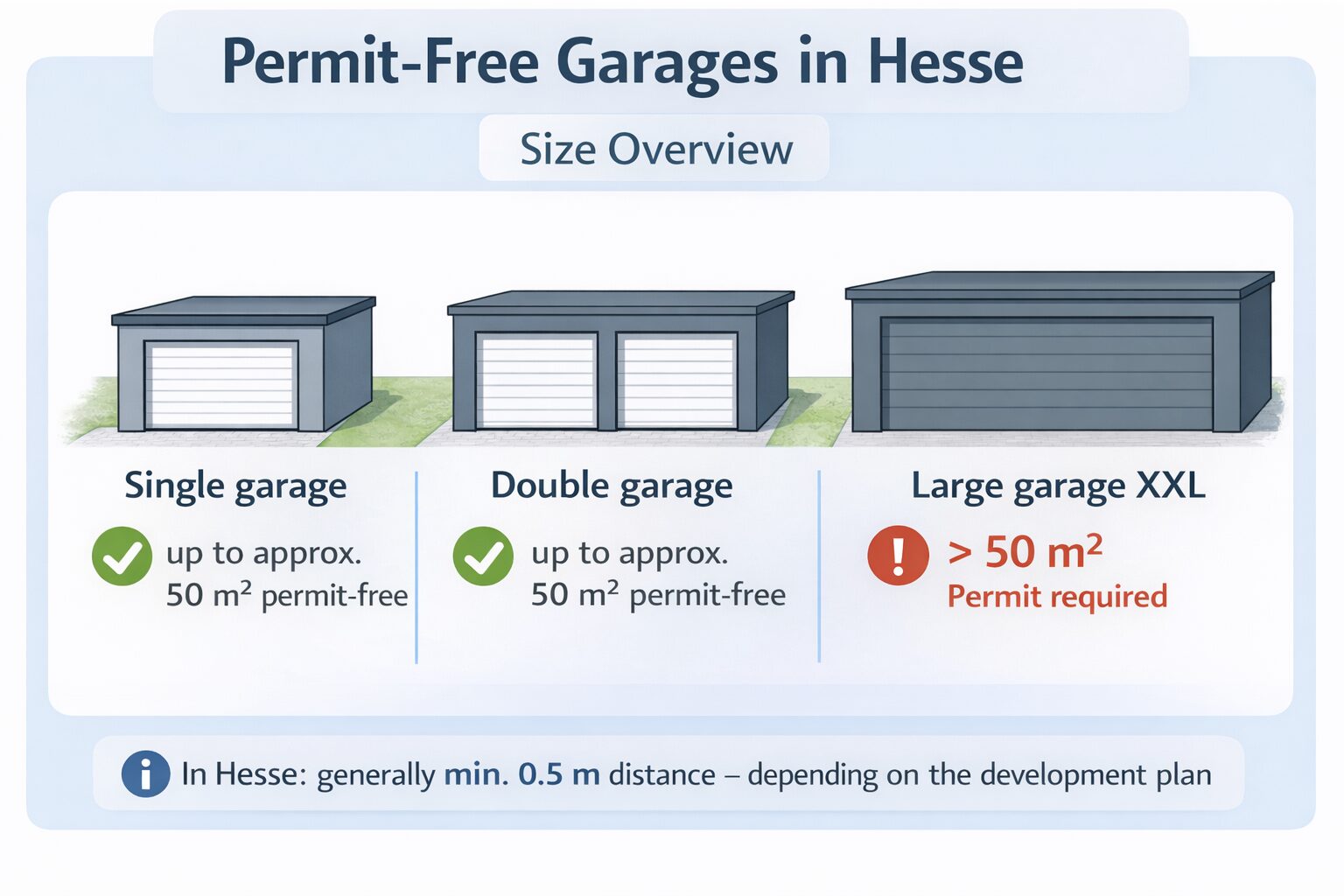
Garage type Typical size Permit
Single garage approx. 3 × 6 m often does not require a permit
Double garage approx. 6 × 6 m depending on the development plan
Large garage over 40 to 50 m² usually requires a permit
These values are for guidance only. The actual limits may vary depending on the municipality.
5. Building a garage on the property line
Many builders want to build their garage directly on the property line. This so-called boundary development is particularly useful for smaller properties.
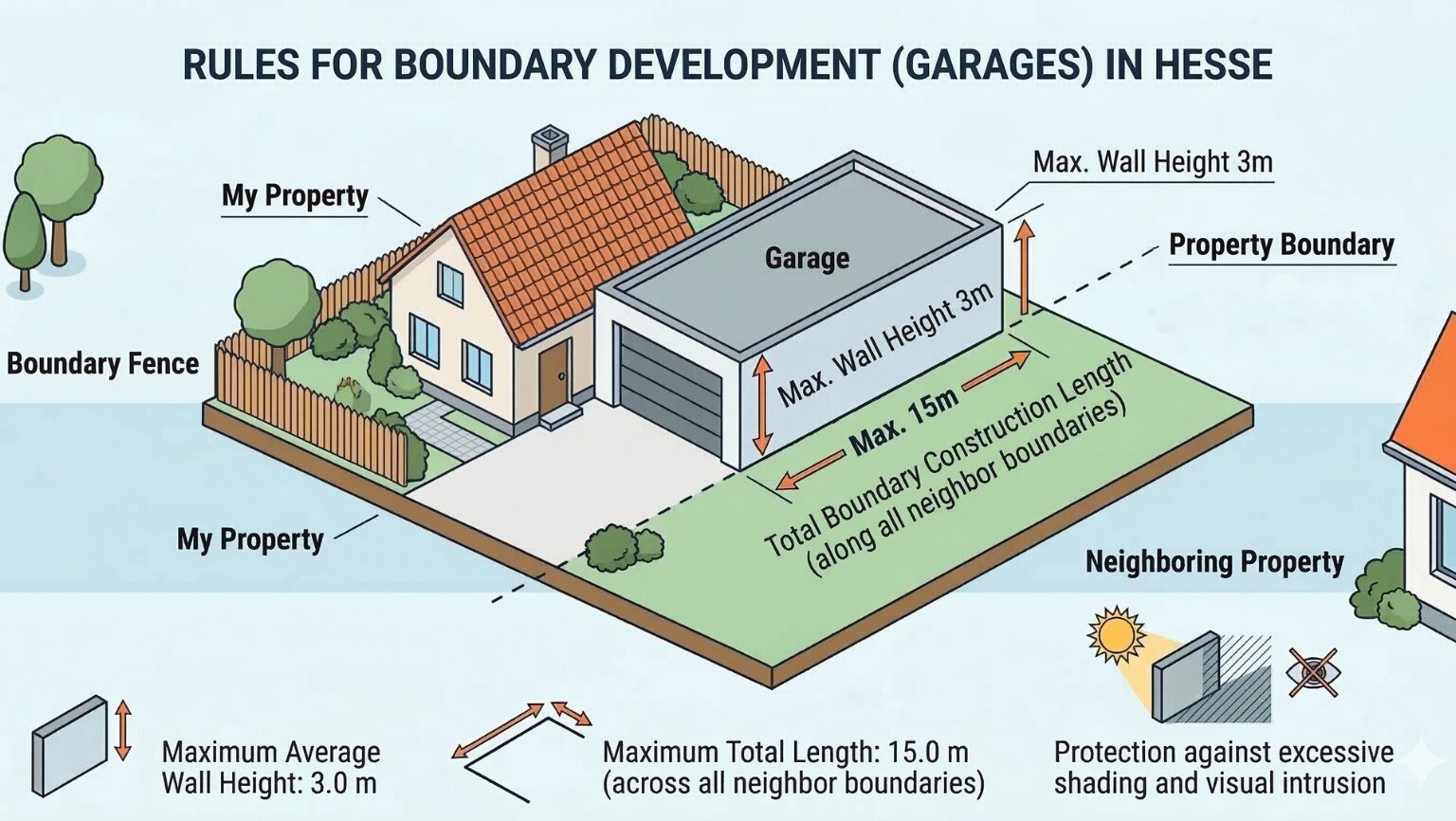
In Hesse, boundary development is generally possible. However, there are clear limits. A maximum of 15 meters of the property line may be built on. At the same time, the wall height of the garage may not exceed three meters as a rule.
This regulation protects neighboring properties from excessive shading or restriction.
6. Clearance areas for garages in Hesse
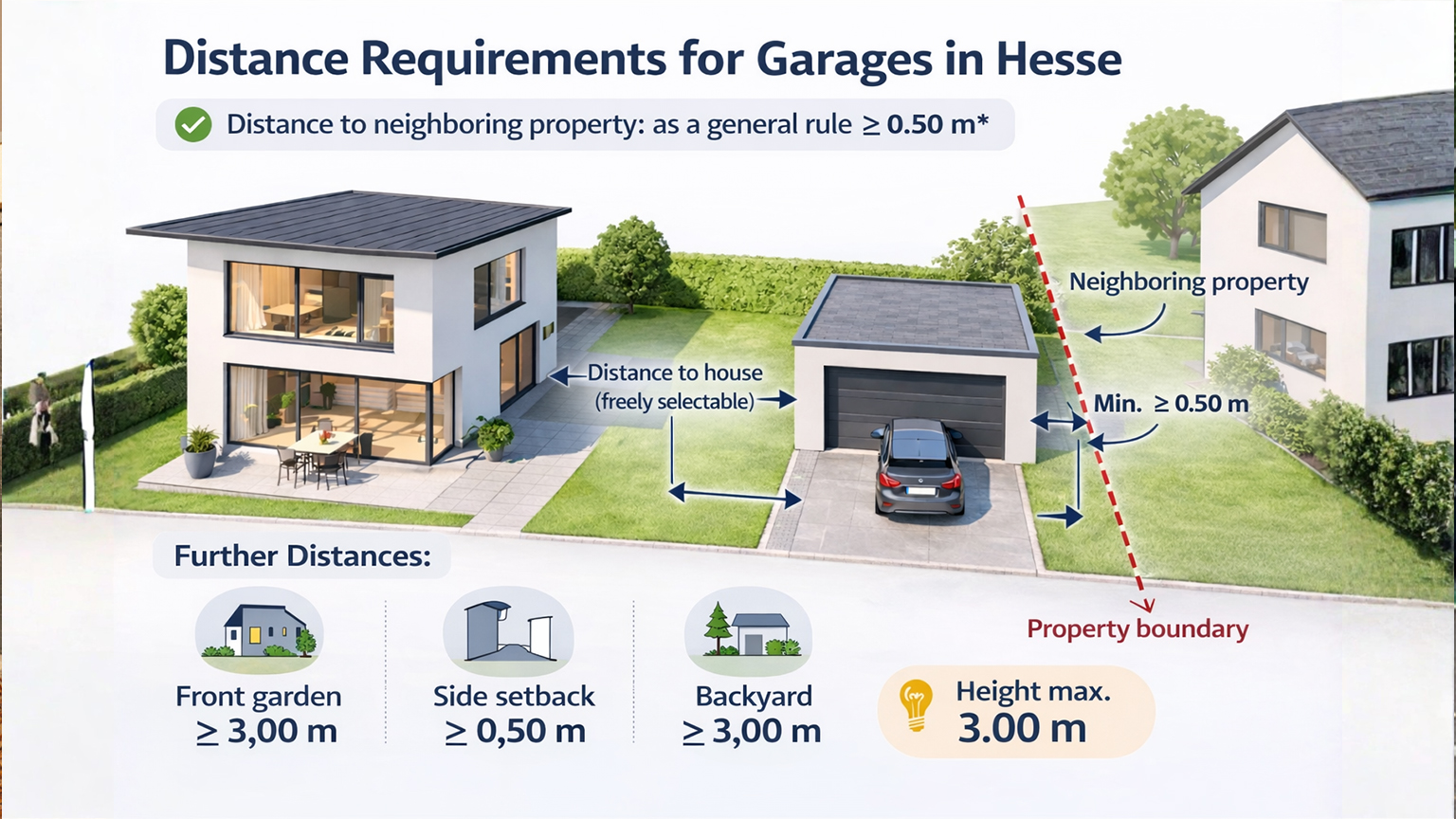
If a garage is not built directly on the property line, clearance areas must be observed.
These clearances ensure that buildings are sufficiently spaced apart. At the same time, there is enough space for light, air, and fire protection.
The size of the clearance area usually depends on the height of the building.
7. Maximum dimensions and height of garages
The size of a garage influences its use and whether a permit is required.
Many single garages are approximately three meters wide and six meters long. Double garages often reach a width of approximately six meters or more.
Height plays an important role, especially for garages located on the property line. In many cases, the wall height of the garage may not exceed three meters.
8. Fire safety regulations for garages
Garages contain vehicles with fuel and batteries. Therefore, special safety requirements apply.
An important point is the ventilation of the garage. This ensures that exhaust gases and smoke can escape. Open garages therefore have larger openings in the outer walls.
Additional fire safety measures may be necessary for larger garage facilities.
9. What may be stored in a garage
Garages are generally intended for parking vehicles. These include cars, motorcycles, or bicycles.
Many owners also use their garage as storage space. This is possible as long as the main purpose of the garage is retained.
However, problems arise when storing large quantities of flammable materials. These include, for example, large quantities of gasoline or gas cylinders.
10. Prefabricated garages and building law in Hesse
Prefabricated garages are a popular solution for many builders. They are usually made of concrete and are delivered to the property as a finished component.
The big advantage is the short construction time. Many prefabricated garages can be erected within a few hours.
However, the same building regulations apply as for brick garages. The decisive factors are size, location, and compliance with all building regulations.
11. Practical example: Garage on the property line
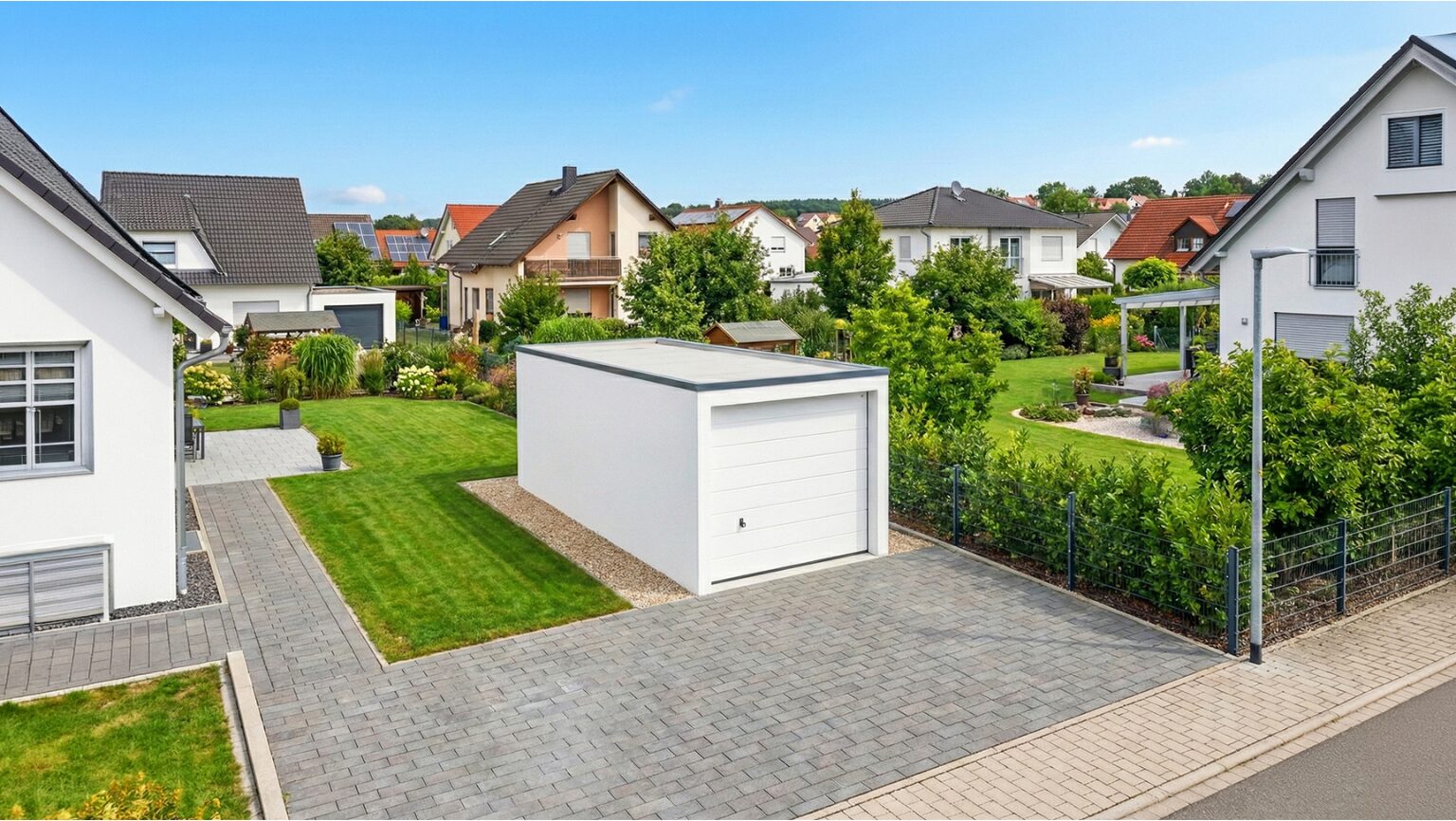
A typical example is a single garage on the property line of a single-family home.
Let’s assume that a garage with a width of three meters and a length of six meters is planned. If the garage complies with the permitted height, it can often be built without a permit.
In addition, it must not exceed the permitted length on the property line.
However, the situation may change for larger garages.