
The invention from ZAPF turns 50
The one-piece prefabricated concrete garage is celebrating its 50th birthday this year. It was developed by Werner Zapf Jr. In 1968, he applied for a patent for it and presented it at the Upper Franconia Exhibition in Bayreuth.
With the prefabricated concrete garage as we know it today, the garage body is poured in one piece in a large formwork. After the concrete has hardened, the garage is painted inside and out, the door and the desired additional equipment are installed and then the garage can be on its way to its new owner. The inventor of this manufacturing process was Werner Zapf Jr. who managed ZAPF GmbH from 1966 to 1999 and had a huge influence on the company. “During this time, he not only continued to expand the company, but also established ZAPF as one of the leading manufacturers of prefabricated concrete garages in Germany,” says Emmanuel Thomas, who today manages the business of ZAPF GmbH together with Jörg Günther.
The one-piece prefabricated garage as a milestone
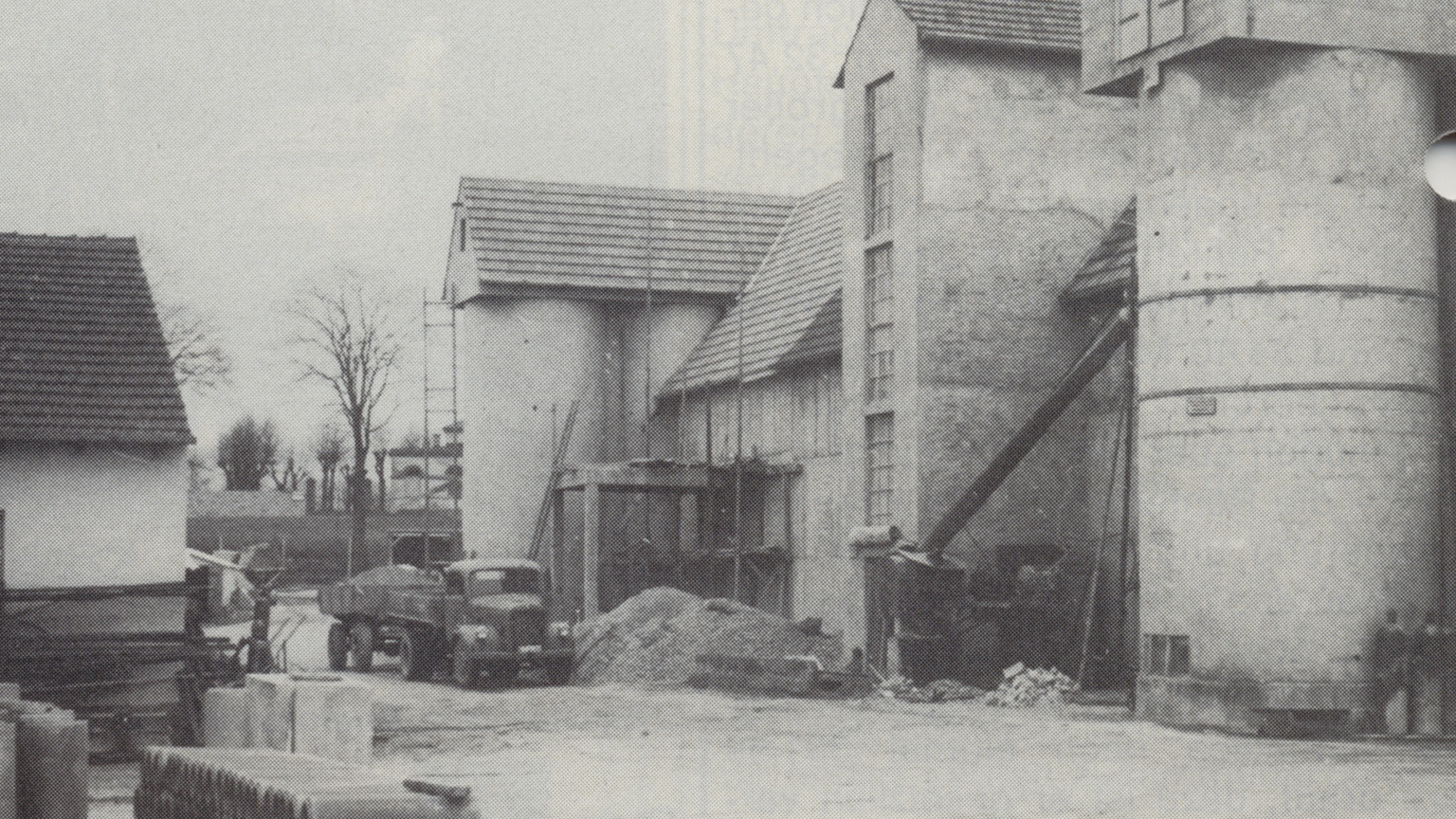
The history of the garage is closely linked to that of the automobile. In the last century, the car developed from an absolute luxury item to a vehicle that the general public could also afford. And so, from the 1950s and 1960s onwards, it slowly became common practice to plan new homes and buildings with associated garages. During this time, ZAPF also underwent a change: the company shifted its focus away from concrete plants and structural and civil engineering towards the production of precast concrete parts – for industrial buildings and bridges, but also for houses and garages. As early as 1961, ZAPF presented a prefabricated concrete garage at the Upper Franconia Exhibition. However, this was still made from several individual parts that were joined together during assembly. “The development of the monolithic prefabricated garage in 1968 was ultimately a milestone,” says Emmanuel Thomas, “because it made production, transportation and installation much more efficient and therefore more cost-effective. This made a garage affordable for even more people.”
Larger, more modern, more comfortable
Whereas 50 years ago, the main focus was clearly on protecting the car, garages today are much more than a covered, lockable parking space for just one car: the trend has long been towards wide-span garages, in which two cars can be parked and there is also space for bicycles or sports equipment. This means that the garage is also partly a substitute for the cost-intensive basement of the home and is an important factor when it comes to the value of the house and property. Parking convenience and appearance also play a much greater role. “We now equip the majority of our new garages with modern sectional doors and electric door drives,” says the ZAPF Managing Director. “Smarthome, i.e. networked technology that allows the door, ventilation or light to be controlled via a smartphone app, for example, has also found its way into the garage and we now even offer an integrated charging station for electric vehicles.” Time has not stood still since the first one-piece prefabricated garage and it will be interesting to see what prefabricated garages can do on their 100th birthday.