

Coat or renovate a garage floor?
A garage floor has to withstand a lot in everyday use, as vehicles bring moisture, road salt, dirt, and oil into the garage. Additionally, the floor is subjected to high pressure loads. That’s why a simple concrete floor is often not enough if you want your garage to remain well-maintained, clean, and durable in the long term. Many owners therefore decide to coat, seal, or completely renovate their garage floor.
But which solution makes sense, and when is a simple floor paint sufficient? The question also frequently arises regarding the costs involved and whether the work can be done yourself. In this guide, you’ll learn which materials are suitable, what the differences are, and which solution proves most effective in the long run.
Key Points at a Glance
- Why is the right garage floor important? A durable garage floor protects against moisture, oil, road salt, and costly damage to the concrete floor.
- What requirements should a garage floor meet? A good garage floor must be durable, slip-resistant, easy to maintain, and chemical-resistant.
- What options are available for garage floor coatings? Epoxy resin, PU coatings, and special floor paints offer different advantages and costs.
- When should a garage floor be renovated? Cracks, moisture, spalling, or severe signs of wear are typical indications that renovation is needed.
- What are the differences between concrete, tile, and synthetic resin? The materials differ primarily in terms of durability, maintenance, load-bearing capacity, and cost.
- How much does a new garage floor cost? The cost depends on the material, the area, and the condition of the subfloor.
- Should you coat the garage floor yourself or hire a professional? Small jobs can be done yourself, but for major damage or high-quality coatings, it’s often worth hiring a specialist company.
- How is a garage floor properly coated? Thorough preparation, a suitable primer, and a clean sealant are essential.
- What problems commonly occur with garage floors? Cracks, moisture, discoloration, and peeling coatings are among the most common problems.
- Which garage floor solution is right for which garage? The right solution depends on usage, traffic, and budget.
- Which solution is worth it in the long run? High-quality coatings are more expensive but often offer a significantly longer lifespan and require less maintenance.
Why is the right garage floor important?
High daily stress
A garage floor is subjected to heavy daily use, as vehicles bring moisture, snow, road salt, and dirt into the garage. At the same time, the floor is subjected to high compressive loads, particularly from heavy vehicles or frequent maneuvering. Without adequate protection, damage to the concrete floor can therefore occur quickly.
Protection against moisture and chemicals
Oil, gasoline, and other chemicals are also particularly problematic because these substances often seep into unprotected concrete and leave permanent stains. Additionally, moisture can penetrate small cracks. In winter, the water then freezes and further exacerbates the damage.
Longer Lifespan and Better Appearance
A high-quality garage floor therefore not only protects the surface but also extends the lifespan of the entire garage. Furthermore, a well-maintained floor significantly improves the appearance. Anyone looking to modernize or upgrade their garage should therefore not underestimate the importance of the floor.
What requirements should a garage floor meet?
A modern garage floor must meet several requirements at once. This is not just about appearance, but also about safety and durability.
First and foremost, high compressive strength is important, as vehicles, jacks, or tools place daily stress on the floor. Therefore, the surface must remain stable and must not break or crack.
Equally important is slip resistance. Especially in rain or snow, the floor gets wet quickly, increasing the risk of accidents. A suitable floor coating for the garage significantly reduces this risk.
Additionally, the garage floor should be oil-resistant and chemical-resistant so that oil, fuels, or cleaning agents do not damage the surface. Epoxy resin or synthetic resin floors offer significant advantages in this regard.
Cleaning also plays an important role, as a low-maintenance garage floor saves time and effort in the long run. Dirt and tire debris are therefore much easier to remove from sealed floors than from bare concrete.
What are the options for garage floor coatings?
Epoxy Resin Coating
An epoxy resin garage floor is one of the most popular solutions. Epoxy resin forms a hard, durable surface and reliably protects the concrete floor from moisture and chemicals.
Its high load-bearing capacity is a particular advantage. That is why epoxy resin is also frequently used in workshops or industrial halls. Additionally, the surface is easy to clean and has a modern look.
However, the coating requires a well-prepared substrate. Moisture in the concrete can lead to problems later on. Furthermore, epoxy resin is relatively rigid and is more sensitive to significant temperature fluctuations.
When applied properly, the lifespan is often ten to twenty years.
PU Coating
PU coatings are made of polyurethane and are more elastic than epoxy resin. This makes them particularly well-suited for garages with temperature fluctuations or slight movements in the substrate.
The surface remains durable while also being slightly more flexible. This results in fewer cracks. Additionally, PU offers an attractive appearance and good UV resistance.
Compared to epoxy resin, the costs are usually slightly higher. However, the coating impresses with its elasticity and durability.
Floor paint for the garage
Floor paint for the garage is the most affordable solution. It is particularly suitable for older garages or smaller budgets.
Application is relatively simple and can often be done yourself. However, the durability is significantly lower than that of professional coatings. Especially under heavy use, wear and discoloration occur more quickly.

Don’t miss out on any more information!
Don’t want to miss out on creative ideas for your garage? Whether it’s clever uses, new products, or exclusive promotions, our ZAPF newsletter will keep you one step ahead. Get regular inspiration delivered straight to your inbox and stay up to date on how versatile a ZAPF garage really can be. Simply sign up and become part of our community – it’s easy and, of course, free.
When should a garage floor be renovated?
Not every damaged garage floor needs to be completely replaced right away. Nevertheless, damage should be identified early to prevent more serious problems from arising.
Typical signs include cracks in the concrete floor, spalling, or loose areas. Dark moisture stains or salt efflorescence also often indicate that moisture is penetrating the floor.
Minor damage can often be repaired with repair mortar or special synthetic resins. If larger areas are affected or there is deeper moisture damage, a complete rebuild is usually necessary.
Anyone wishing to renovate their garage floor should also check whether the subfloor is still load-bearing. A new coating will only last long-term if the subfloor remains stable.
How do concrete, tile, and synthetic resin differ for garage floors?
Concrete floor
The classic concrete floor is standard in many prefabricated garages. Concrete is robust, comparatively inexpensive, and very durable.
However, untreated concrete is sensitive to moisture, oil, and road salt. Therefore, a concrete floor in the garage should be sealed or coated if possible.
Tile Floor
Garage tile floors have a high-quality appearance and are easy to clean. Tiles are frequently used, particularly in modern garages or with high-quality interior finishes.
However, tiles can crack in freezing temperatures or under heavy loads. Additionally, damage often occurs to the grout lines or edges. Therefore, tiles are better suited for garages with lower traffic.
Resin flooring
Resin flooring for the garage is considered a modern premium solution. The surface is seamless, durable, and easy to maintain.
Resin floors offer high chemical resistance and also impress with their modern look. Additionally, they can be customized in various colors and finishes.
However, the costs are higher than for simple concrete or painted solutions.
How much does a new garage floor cost?
Garage floor costs depend heavily on the material and the condition of the subfloor. Additionally, the size of the garage plays an important role.
Solution Cost per m²
Garage floor paint approx. 10–25 €
Epoxy resin garage approx. 40–90 €
PU coating approx. 50–100 €
Tile floor approx. 60–120 €
Synthetic resin garage floor approx. 70–150 €
Additional costs often include sanding, priming, or repairing cracks. While those who choose to install the garage floor themselves save on labor costs, they must factor in the time and tools required.
Should you coat the garage floor yourself or hire a professional?
Many DIYers choose to coat the garage floor themselves because it saves money initially. Simple floor paints or minor repairs can often be done on your own.
However, mistakes often occur during preparation. If the concrete floor isn’t thoroughly cleaned or moisture remains in the substrate, the coating often adheres poorly. This can cause it to peel or crack later on.
In addition, the proper application of epoxy resin requires experience, as mixing ratios, drying times, and temperatures must be strictly adhered to. Hiring a professional contractor is therefore particularly worthwhile for high-quality coatings or major renovations, as the results are usually more durable and uniform.
How is a garage floor properly coated?
Preparing the Substrate
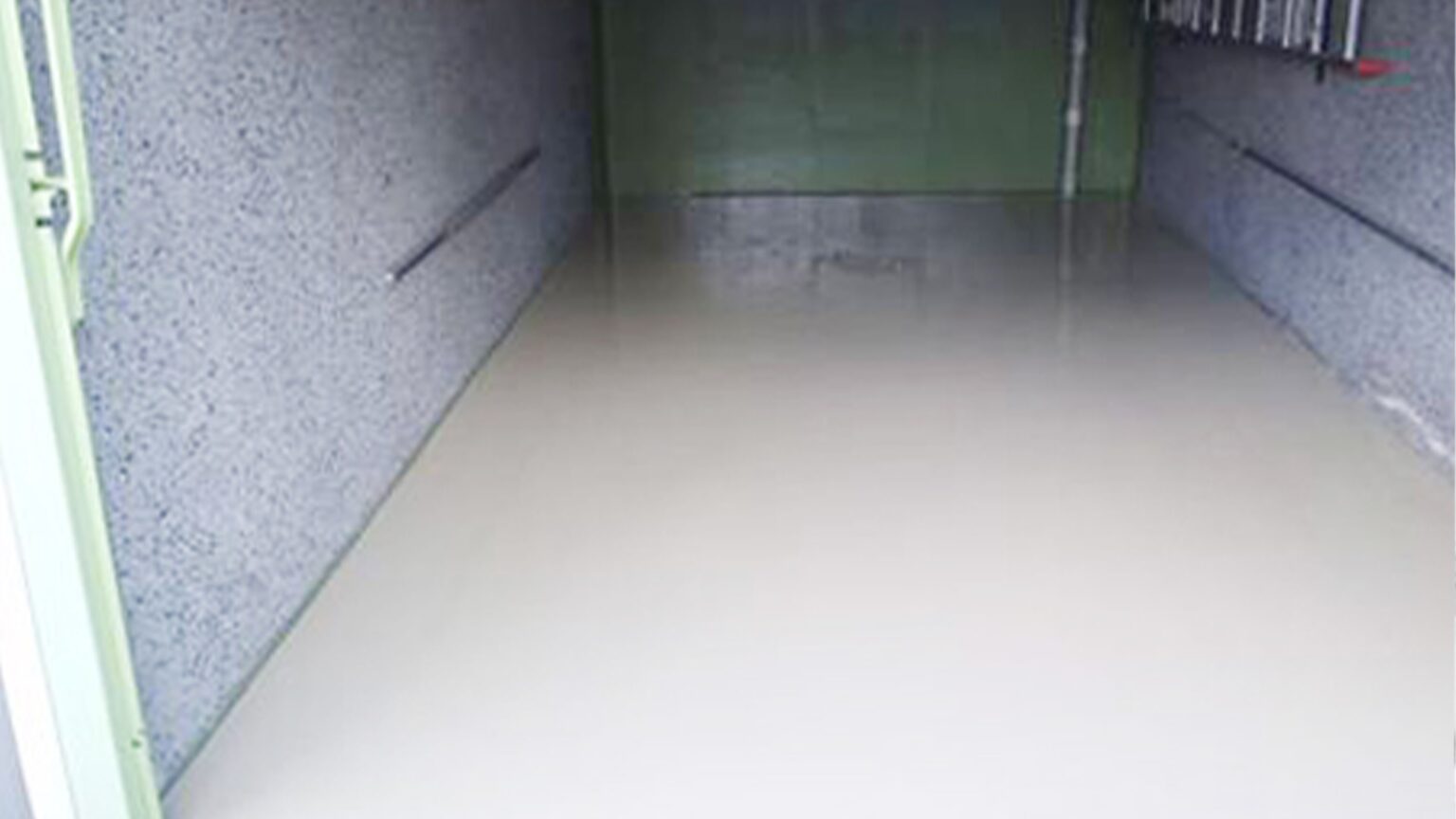
Preparation is crucial for durability. First, the garage floor must be thoroughly cleaned. Oil residues, dust, and loose areas must be completely removed.
In addition, the floor is often sanded to improve the coating’s adhesion. Afterward, check for moisture in the concrete.
Apply primer
A primer improves the adhesion of the subsequent coating. It also reduces the concrete’s absorbency.
It is important to apply it evenly. Afterward, the primer must dry completely.
Sealing the Coating
In the final step, the actual floor coating is applied. Depending on the system, several layers may be required.
Additionally, a sealant can enhance protection and make cleaning easier. Afterward, the floor needs sufficient time to cure.
What problems commonly occur with garage floors?
Tire marks and discoloration
Hot tires often leave dark marks on sensitive floors. High-quality coatings significantly reduce this problem.
Cracks in the concrete floor
Cracks are often caused by moisture, frost, or heavy loads. Minor damage should be repaired early on.
Peeling coatings
The cause is usually poor preparation or excessive residual moisture in the concrete floor.
Moisture and mold
Moisture is one of the biggest problems in garages. That is why garage floors should always be adequately waterproofed and sealed.
Which garage floor solution is right for which garage?
For a simple single-car garage, a solid floor coating or sealant is often sufficient. Double garages often benefit from more durable epoxy resin systems, as the load is higher.
Workshop garages require particularly robust and chemical-resistant surfaces. Synthetic resin floors or high-quality epoxy resin coatings are particularly well-suited here.
Heavily used garages with heavy vehicles or frequent use should be professionally coated whenever possible to ensure the floor remains stable in the long term.
Which solution is worthwhile in the long term?
The best solution depends primarily on your budget and intended use. A simple floor paint is a cost-effective entry-level option, but it usually cannot withstand heavy loads over the long term.
If you want to protect and enhance your garage for the long term, a high-quality epoxy resin or PU coating is often the better choice. While the initial costs are higher, maintenance and repair costs are significantly reduced.
A durable garage floor is particularly worthwhile for modern precast concrete garages, as it protects the entire garage and preserves its value over the long term.
Frequently Asked Questions
For heavily used garages, epoxy resin and PU coatings are considered particularly durable and resilient.
Yes, simple coatings can be applied by yourself. However, high-quality systems require experience and careful preparation.
When professionally applied, an epoxy resin garage floor often lasts ten to twenty years.
Depending on the material and condition, costs typically range between 40 and 150 euros per square meter.
Cracks are often caused by moisture, frost, road salt, or heavy loads on the concrete floor.
Note: The information provided is for general guidance only and does not replace individual professional advice. Costs, durability, and suitable coating systems may vary depending on the condition of the garage floor, materials, and usage. For an accurate assessment, we recommend having the floor inspected by a professional contractor.
Configure your garage in 3D now and experience it virtually on your own property!
With our garage configurator, you can easily and intuitively put together the size, features, doors, windows, and extras in just a few steps. We will then arrange a non-binding consultation appointment with you, on the basis of which you will receive an individual quote, naturally at a fair price and with no obligation to purchase. Experience your configured garage in impressive 3D visualization during the non-binding consultation appointment.