

Metal Garage or Precast Concrete Garage: The Big Comparison 2026
Anyone planning a weather-protected parking space often faces an important question: metal garage or precast concrete garage? Both solutions protect your car better than an open parking space or a carport. However, they differ significantly in terms of cost, stability, security, indoor climate, appearance, and lifespan. That’s why it’s worth making a detailed comparison before you buy an affordable garage or plan a long-term solution for your home, car, bicycles, e-bikes, and storage space.
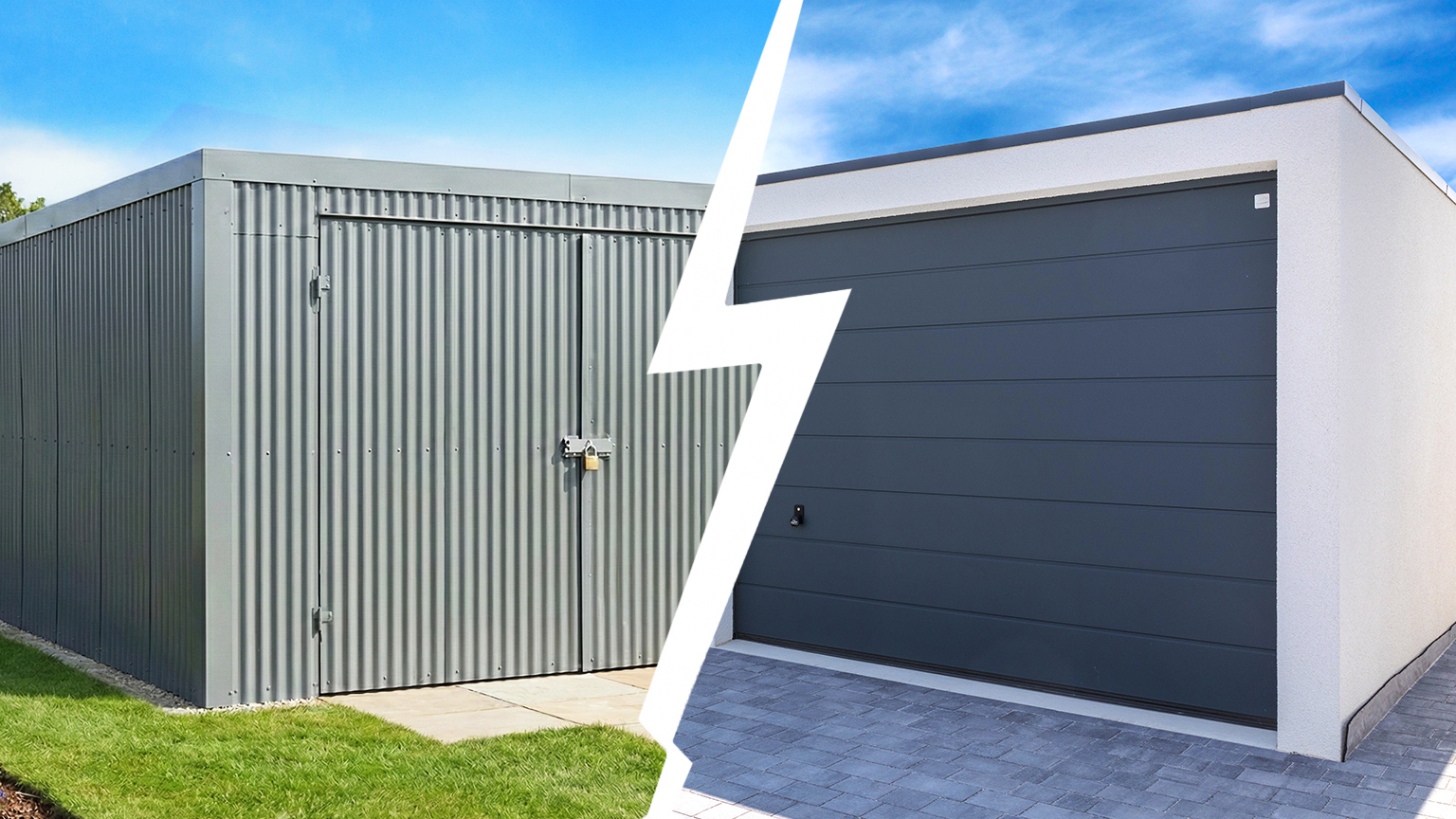
Key Points at a Glance
- What is a metal garage? A metal garage is a simple garage made of metal that is often affordable and quick to assemble.
- What is a precast concrete garage? A precast concrete garage consists of an industrially manufactured concrete structure and usually offers greater stability, security, and quality.
- How much does a metal garage or precast concrete garage cost? Metal garages are usually more affordable, while precast concrete garages cost more but are often more durable and offer greater comfort.
- Which garage provides better protection for your car and belongings? Thanks to its solid construction, a precast concrete garage usually offers better protection against wind, hail, break-ins, and vandalism.
- How important are indoor climate, humidity, and condensation? A good indoor climate is important because your car, tires, tools, bicycles, and e-bikes can only remain protected over the long term with proper ventilation.
- How does the garage affect the appearance and design of the house? A precast concrete garage can often be better adapted to the house, facade, and property, giving it a higher-quality appearance.
- Which solution adds more value to the home? A precast concrete garage can enhance the overall impression and value of the property more than a simple metal garage.
- How do installation and construction time differ? Both options are completed faster than a brick garage, but the precast concrete garage requires a suitable access road and usually a crane.
- How much maintenance do sheet metal garages and precast concrete garages require? A sheet metal garage requires more attention when it comes to corrosion protection, coatings, and seals, while concrete primarily requires regular inspection and maintenance.
What is a metal garage?
A metal garage is a garage made of metal. It’s often constructed from sheet steel or galvanized metal parts. It’s frequently sold as a kit or offered pre-assembled, which makes it relatively quick to set up. This is precisely why it appeals to many people who want to buy an affordable garage and, above all, are looking for a simple, weather-protected parking space.
When comparing a metal garage to a prefab garage, the metal garage scores higher mainly in terms of its starting price. It’s often more affordable than other types of garages and can serve as an alternative to a carport if an enclosed space is desired. However, buyers shouldn’t focus solely on the purchase price. Material thickness, anchoring, coating, foundation, and ventilation play a major role in determining how stable, dry, and durable the garage will be in the long run.
A metal garage is particularly suitable for budget-conscious homeowners, as a temporary solution, or for simple purposes. It can protect a second car, a trailer, garden tools, or provide storage space. However, anyone who wants to protect their family car, charge an e-bike safely, or create high-quality storage space next to the house should examine the garage more closely. This is because the disadvantages of a sheet metal garage often only become apparent in everyday use: noise during rain, possible dents from hail, condensation, or corrosion can become issues depending on the quality and location.
What is a precast concrete garage?
A precast concrete garage is an industrially prefabricated garage made of concrete. The garage structure is manufactured in a factory and then delivered by truck. On site, the garage is usually placed onto the prepared foundation using a crane. This results in a solid garage without the need to build it brick by brick on the construction site.
A comparison of precast concrete garages quickly reveals that this solution is appealing to homeowners who are planning for the long term. It offers a sturdy structure, a high-quality appearance, and, in most cases, excellent practicality for everyday use. That’s why it’s a good fit for homes where the garage, house, and outdoor area are meant to create a harmonious overall look.
The precast concrete garage—its advantages lie primarily in stability, safety, durability, and ease of use. A precast concrete garage is not only suitable as a sturdy garage for a car but also as storage space attached to the house. Bicycles, tires, tools, patio furniture, or charging accessories for e-bikes can be safely stored there. In addition, a solid garage helps keep the outdoor area organized, as many items can be stored there in a dry and enclosed space.
How much does a metal garage or precast concrete garage cost?
For many homeowners, cost is the most important initial factor to consider. A metal garage is usually significantly cheaper to purchase. According to the specifications provided, Aroundhome lists starting prices of around 1,000 euros for metal garages and around 4,900 euros for steel garages. Prefabricated concrete garages are generally more expensive but offer greater sturdiness, security, and long-term durability.
When comparing costs, buyers should not focus solely on the initial purchase price. This is because additional expenses often come on top of the costs for a metal garage and a precast concrete garage. These include the foundation, delivery, installation, crane, access road, drainage, garage door opener, and any additional features. When comparing garage costs, it is therefore particularly important to consider the total package.
Long-term costs also play a major role. A metal garage may require more maintenance due to corrosion protection, coatings, bolted connections, or aesthetic wear and tear. A precast concrete garage also requires maintenance and inspections, such as on the door, roof, or drainage system. Nevertheless, the solid structure is often designed for long-term use. If you want to plan for a durable garage, you should therefore not only look for the lowest price but also consider durability, maintenance requirements, and resale value.

Don’t miss out on any more information!
Don’t want to miss out on creative ideas for your garage? Whether it’s clever uses, new products, or exclusive promotions, our ZAPF newsletter will keep you one step ahead. Get regular inspiration delivered straight to your inbox and stay up to date on how versatile a ZAPF garage really can be. Simply sign up and become part of our community – it’s easy and, of course, free.
Which garage better protects your car and belongings?
When it comes to protection, the precast concrete garage usually comes out on top. Its solid structure offers high stability and is more resistant to wind, hail, vandalism, and attempted break-ins. For many owners, this is important because the garage is no longer just a parking space. It protects not only the car but also bicycles, tools, tires, chargers, and other items.
A metal garage, of course, also offers weather protection. It can keep rain, snow, and sun off the vehicle and is therefore better than an open parking space. However, depending on its quality, it may seem flimsier and be more susceptible to dents, noise, or corrosion. Especially during severe weather events, hail, or high wind loads, the material thickness, construction, foundation, and anchoring play a crucial role.
Anyone looking for hail protection for their car, enhanced burglary protection for their garage, or a long-term solution for valuable items should seriously consider a precast concrete garage. It provides greater peace of mind in everyday life and is therefore well-suited for people who want to park their car safely while also creating additional storage space.
How important are indoor climate, humidity, and condensation?
Indoor climate is often underestimated when buying a garage. Yet it plays a major role in determining whether your car, tools, tires, bicycles, and e-bikes remain well-protected in the long term. Condensation can be a particular issue with metal garages. When warm air comes into contact with cold metal surfaces, moisture can form. With poor ventilation, this moisture accumulates and can lead to corrosion or unpleasant odors.
Even a precast concrete garage needs good ventilation. While concrete appears more solid and can buffer moisture differently than thin metal, proper air exchange, waterproofing, and drainage are still essential here as well. A garage with a good indoor climate protects not only the vehicle but also everything else stored inside.
This point is becoming increasingly important, especially with modern uses. Many people want to safely charge their e-bikes, store tires, or keep tools dry. That’s why the question shouldn’t just be: metal garage or precast concrete garage? It’s also important to ask: How is the garage ventilated, how does it stay dry, and how well does it suit the intended use?
How does the garage affect the home’s appearance and design?
A garage is usually prominently visible on the property. That’s why it influences the overall impression of the house. A simple metal garage often looks functional. Depending on the model, it can appear plain, practical, or somewhat industrial. This may be sufficient for a basic parking space. However, for a high-end home, this look doesn’t always fit the desired overall aesthetic.
A precast concrete garage often offers more options in terms of design, finish, door, roof shape, and color scheme. It can be better adapted to the house, the facade, and the outdoor area. As a result, it appears more like an integral part of the property. This is particularly important if the house, driveway, garden, and garage are meant to complement each other visually.
Which solution adds more value to the home?
If the garage is intended to be a permanent fixture on the property, there are many arguments in favor of a precast concrete garage. It appears more solid, higher-quality, and more integrated with the property. As a result, it can help increase the property’s value or at least reinforce the home’s high-end appearance.
A metal garage can also look neat, especially if it’s built to a high standard. Nevertheless, it often remains more of a functional solution. Anyone looking to enhance their home’s value and plan a garage with a harmonious appearance should therefore definitely consider a precast concrete garage as a top contender.
How do installation and construction time differ?
Both options can be completed faster than a brick garage. A metal garage is often delivered as a kit and can be assembled very quickly, depending on its size and the level of preparation. This makes it an attractive option when a weather-protected parking space is needed quickly.
A precast concrete garage is prepared at the factory and usually erected on-site in a short amount of time. However, the conditions must be right. The foundation must be prepared, the access road must be suitable for the truck, and there must be enough space for the crane. The supplied specifications cite Garagen Rostock as a source, which describes the need for a crane as a potential additional expense.
Before making a decision, homeowners should therefore consider several points: Is there enough space on the property? Is the access road suitable? Is a permit required? Is the foundation prepared? Does the delivery date fit the construction schedule? These questions apply to both options but are particularly important for precast concrete garages due to delivery and crane requirements.
How much maintenance do metal garages and precast concrete garages require?
A low-maintenance garage is a major advantage in everyday life. Nevertheless, no garage can do without maintenance entirely. With a metal garage, owners should regularly check coatings, screw connections, seals, and potential rust spots. Corrosion protection is particularly important, as even minor surface damage can lead to major problems over time.
A precast concrete garage has a solid structure and appears more durable. Nevertheless, it also requires maintenance, including cleaning, inspecting the roof waterproofing, checking the drainage system, and maintaining the garage door. If you use a garage door opener, you should also have it inspected regularly.
In a direct comparison, a metal garage is often more susceptible to visual aging, dents, and corrosion. The precast concrete garage, on the other hand, stands out for its durability. That’s why it’s the better solution for many owners who want to use a garage long-term and don’t want to constantly worry about repainting, rust protection, or minor repairs.
How secure are metal garages or precast concrete garages in everyday use?
Security means more than just a closed door. A garage should protect your car, bicycles, tools, garden equipment, and charging accessories. It should also help keep your outdoor space organized and make everyday life easier. This is exactly where the difference between a simple parking space solution and a permanent garage solution becomes apparent.
A precast concrete garage appears more robust due to its solid construction. It is therefore particularly appealing when storing high-value items. Anyone who wants to protect a family car, charge e-bikes safely, or store expensive tools will benefit from a sturdy, enclosed solution.
A metal garage may suffice for simple storage and parking needs. However, it should be evaluated critically when storing valuable items. Key factors include a good door, secure locking mechanisms, stable anchoring, and appropriate equipment. Nevertheless, the precast concrete garage usually has the edge in terms of a sense of security and sturdiness.
Which garage is right for which use?
The decision between a metal garage and a precast concrete garage depends heavily on how the garage will be used. Not everyone needs the same solution. That’s why honestly assessing your needs is more important than simply comparing prices.
For whom is a metal garage sufficient?
A metal garage may be sufficient if it’s primarily used as an affordable second parking space or simple storage area. It’s a good fit for people looking for an affordable alternative to a solid-construction garage and wanting to save money in the short term. It can also be a practical choice for trailers, garden tools, or less delicate items.
However, it’s still important to consider quality and long-term costs. A cost-effective garage isn’t automatically the best garage in terms of value for money. If rust protection, repairs, or upgrades become necessary later on, the price advantage may diminish.
Who should consider a precast concrete garage?
A precast concrete garage is usually a good choice for homeowners planning for the long term. It complements the home well, reliably protects the car, and offers additional storage space. It’s also a strong choice when high-value equipment, bicycles, e-bikes, or tools need to be stored securely.
Those who choose a precast garage over a metal garage aren’t just investing in a parking space. They’re also investing in comfort, security, aesthetics, and preserving property value. That’s why it makes particular sense if the garage is to be used long-term and needs to complement the house.
Which garage is worth the investment in the long run?
In the long run, the precast concrete garage is often the more compelling choice. While it costs more upfront, it offers significant advantages in terms of stability, security, sense of space, aesthetics, and durability. It also feels more like an integral part of the property and can increase the property’s value.
A metal garage remains a sensible option, however, if the lowest purchase price is the top priority. It can be a practical solution when a covered parking space is needed quickly and inexpensively. However, buyers should carefully consider whether they can live with potential condensation, corrosion protection concerns, lower quality, and limited stability.
The bottom line is this: If you want to save money in the short term, you can choose a metal garage. If, on the other hand, you’re thinking long-term—wanting to park your car safely, create storage space near your home, and enhance the quality of your property—you’re usually better off with a precast concrete garage. When buying a garage, therefore, it’s not just the purchase price that should matter, but the overall package of usability, lifespan, safety, maintenance, appearance, and value for money.
What are some common questions about metal garages versus precast concrete garages?
Which is cheaper: a metal garage or a precast concrete garage?
A metal garage is usually cheaper to purchase and, depending on the model, can be available starting at around 2,000 euros. A precast concrete garage, on the other hand, comes with a higher price tag and generally involves higher upfront costs. Depending on size, features, and supplier, concrete garages can cost around 10,000 euros or more. However, they often impress with their stability, durability, and good value for money over many years.
What are the disadvantages of a metal garage?
Typical disadvantages of a sheet metal garage include condensation, noise during rain, potential dents, corrosion, and a simpler appearance. Protection against moisture also plays an important role when using the garage as storage space for bicycles, garden tools, or other equipment. Additionally, potential buyers should note that a sheet metal garage may incur additional costs depending on the foundation, installation, insulation, or features.
What are the advantages of a precast concrete garage?
A precast concrete garage is solid, durable, secure, and can often be easily adapted to fit the house and property. High-quality precast concrete garages usually offer enough space for a car, bicycles, tires, garden tools, or other accessories. A precast concrete garage can also offer advantages over a simple metal garage when it comes to security, weather protection, and retaining its value.
Sources
Editorial briefing with structure, keywords, and specifications for sources and costs.
Aroundhome: Guide to metal garages, prices, variants, and pros and cons, https://www.aroundhome.de/garage/metallgarage/
Prefab Garage Portal: Metal garages, prices, costs, and potential drawbacks, https://fertiggaragenportal.de/blechgaragen-preise-und-kosten/
Garage-und-Carport.de: Pros and cons of prefab garages, https://www.garage-und-carport.de/garage/arten/fertiggarage/fertiggarage-vorteile-und-nachteile/
Garage Expert: Manufacturer-independent information on prefabricated garages, https://www.garagenexperte.de/basis-infos/vorteile-nachteile/
Garages Rostock: Prefabricated garages, concrete options, installation, and crane requirements, https://garagen-rostock.de/vorteile-und-nachteile-von-fertiggaragen/
Wohnglück: Precast concrete garages, costs, advantages, and disadvantages, https://wohnglueck.de/artikel/fertiggarage-aus-beton-kosten-vorteile-nachteile-48005
Prefab Garage Portal: Prefab concrete garages, advantages, disadvantages, prices, and costs, https://fertiggaragenportal.de/betonfertiggarage-vorteile-nachteile-preise-kosten/
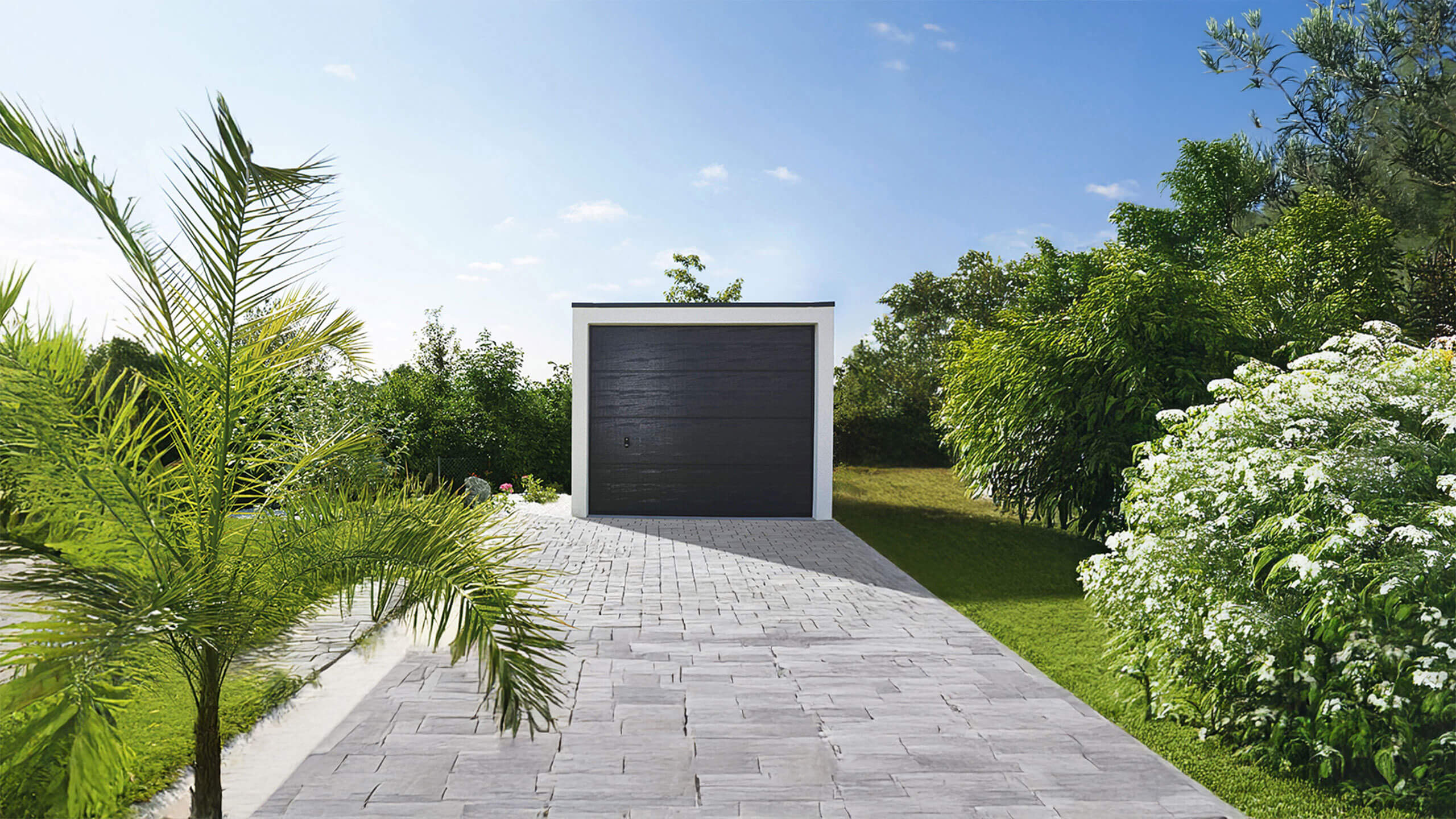
Configure your garage in 3D now and experience it virtually on your own property!
With our garage configurator, you can easily and intuitively put together the size, features, doors, windows, and extras in just a few steps. We will then arrange a non-binding consultation appointment with you, on the basis of which you will receive an individual quote, naturally at a fair price and with no obligation to purchase. Experience your configured garage in impressive 3D visualization during the non-binding consultation appointment.