

Greening Your Garage Roof: Benefits, Costs, Installation & Ideas
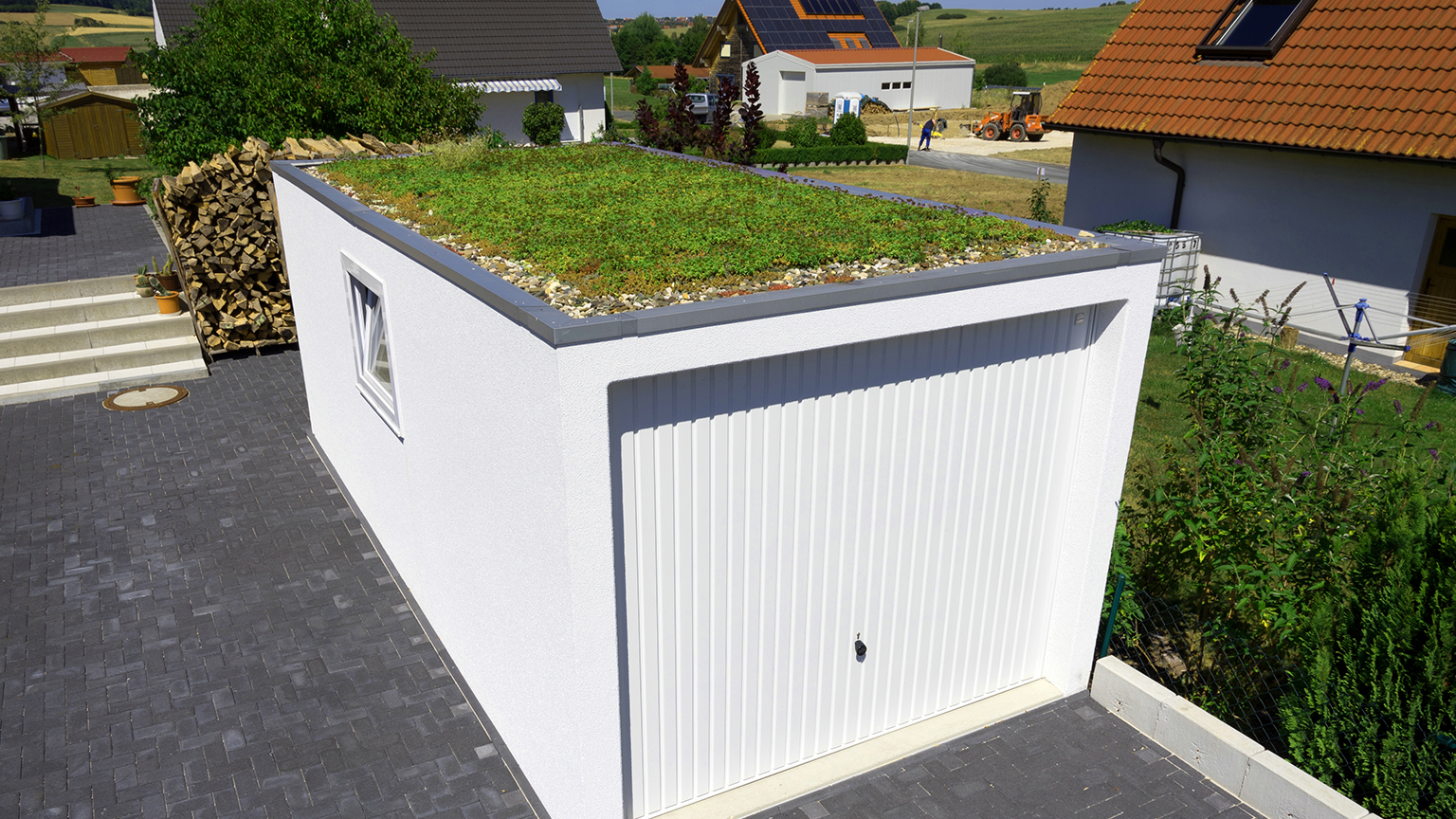
A garage roof is often an unused space. Yet, with the right planning, it can be transformed into a green, vibrant, and practical roof. Greening your garage roof not only improves the garage’s appearance and protects the roof waterproofing but also brings more nature to your property. Especially with a new prefab garage, it’s worth considering a green roof from the start, because structural integrity, waterproofing, and drainage can then be properly planned.
The Most Important Points at a Glance
- Why is it a good idea to green a garage roof? A green garage roof enhances the garage’s appearance, stores rainwater, protects against heat, and creates a habitat for plants and insects.
- Which type of green roof is suitable for a garage? Extensive green roofs are usually best suited for garages because they are lighter, require less maintenance, and are more robust than an intensive roof garden.
- What does extensive green roofing mean? An extensive green roof typically consists of sedum, herbs, mosses, and grasses and requires very little maintenance.
- What does intensive green roofing mean? Intensive green roofing is more like a roof garden, but requires greater installation height, higher load-bearing capacity, more water, and more maintenance.
- What requirements must a green garage roof meet? Before installing a green roof, structural integrity, waterproofing, root protection, drainage, and access for maintenance must be checked.
- How is a green roof on a garage constructed? The structure consists of waterproofing, a protective layer, drainage, filter fleece, substrate, and suitable vegetation.
- What does the typical layer structure look like? The individual layers ensure that water is stored and safely drained at the same time.
- Why is the correct structure so important? A professionally installed structure protects against waterlogging, root damage, and problems with the roof waterproofing.
- Which plants are suitable for a garage roof? Sedum, drought-tolerant herbs, low-growing grasses, and flowering plants are particularly well-suited for a green garage roof.
- How much does it cost to green a garage roof? The costs depend on the roof size, system, waterproofing, and installation; According to the Consumer Advice Center of North Rhine-Westphalia, DIY materials for extensive greening cost roughly 50 to 100 euros per square meter.
- How does a garage with a green roof become part of the garden? A green garage roof visually connects the garage, front yard, and house into a more natural overall look.
- What mistakes should be avoided when greening a garage roof? Common mistakes include failing to perform a structural analysis, using the wrong substrate, covering drains, and selecting unsuitable plants.
- Who benefits from a green garage roof? A green roof is particularly worthwhile for homeowners who want to combine aesthetics, functionality, and sustainability.
Why is it a good idea to green a garage roof?
Anyone looking to green their garage roof is making use of a space that would otherwise often remain gray, hot, and unattractive. Green roofs are particularly well-suited for flat garage roofs, as the surface is usually ideal and visible from the house, garden, or balcony. A plain roof is thus transformed into a green eye-catcher.
A green garage roof enhances the appearance of the entire property. The garage looks less industrial and blends in better with the garden, front yard, and modern architecture. This is particularly appealing when the house and garage are meant to complement each other visually. A garage with a green roof looks high-quality, serene, and natural.
There are also practical benefits. A green roof can retain rainwater, improve the microclimate, and protect the roof waterproofing from direct sunlight. It also creates small habitats for insects. Sedum, herbs, and flowering plants in particular can help ensure that the garage is not only functional but also ecologically sound.
For new construction, it makes particular sense to plan the green roof for the prefabricated garage right from the start. This allows for the load-bearing capacity, roof structure, drainage, and waterproofing to be properly accounted for from the beginning. While retrofitting is often possible later on, it can be more costly.
Which type of green roof is suitable for a garage?
For most private garages, an extensive green roof is the ideal solution. It is relatively lightweight, robust, and low-maintenance. It also works well with the typical flat roofs of garages and carports. Anyone wishing to plant a green roof on their garage should therefore first check whether an extensive green roof complements the garage and roof structure effectively.
Intensive green roofing, on the other hand, is significantly more complex. It is better suited for roofs intended to be used like a small garden. However, this requires the roof to have greater load-bearing capacity, more installation height, and more intensive maintenance. For classic prefabricated garages, this only makes sense if this use was planned from the start.
What does extensive green roofing mean?
Extensive green roofing is the low-maintenance standard solution for garages. It uses plants that cope well with sun, wind, and drought. These include sedum, mosses, low-growing herbs, and some grasses. These plants require little water and tend to grow low to the ground.
The structure of an extensive green roof is usually slimmer than that of a roof garden. This keeps the additional weight lower. This is important because the green roof structure stores water and can therefore become significantly heavier at times. Nevertheless, the load-bearing capacity must always be checked on a case-by-case basis.
A sedum roof for a garage is particularly popular because sedum is very hardy. The plants change color with the seasons, some of them bloom, and they create a vibrant roof surface. This results in an attractive green garage roof without requiring much maintenance.
What does intensive green roofing mean?
Intensive green roofing is more akin to a real roof garden. Here, lawns, perennials, or even small shrubs can be used. This sounds appealing, but it is significantly more demanding. The roof requires more substrate, more water, more maintenance, and excellent load-bearing capacity.
For a standard prefabricated garage, intensive greening usually only makes sense if it is taken into account during the planning phase. This is because it’s not just about plants, but also about loads, drainage, fall protection, and access for maintenance.
If your primary goal is more greenery in the front yard, a more beautiful view, and ecological benefits, you’re usually better off with extensive green roofing. It offers a good balance between impact, cost, and effort.

Don’t miss out on any more information!
Don’t want to miss out on creative ideas for your garage? Whether it’s clever uses, new products, or exclusive promotions, our ZAPF newsletter will keep you one step ahead. Get regular inspiration delivered straight to your inbox and stay up to date on how versatile a ZAPF garage really can be. Simply sign up and become part of our community – it’s easy and, of course, free.
What are the requirements for a green garage roof?
Before you turn a garage roof into a green roof, you should check the structural requirements. The most important factor is structural integrity. A green roof adds extra weight to the roof. This weight comes not only from the plants and substrate but also from stored rainwater. Therefore, it must be clear whether the garage can support this load permanently.
Waterproofing also plays a key role. The garage roof must be watertight and protected against roots. Either the existing waterproofing is already root-resistant, or it must be supplemented with suitable root protection. Anyone wishing to waterproof and green their garage roof should therefore always consider these two steps together.
Drainage is equally important. Roof drains, emergency overflows, and edge areas must not be covered. Water must be able to drain safely to prevent waterlogging. At the same time, the green roof should store rainwater. Therefore, a system is needed that can do both: retain water and drain excess water.
For precast concrete garages, extensive green roofs can be a typical application. Nevertheless, the specific load-bearing capacity must always match the respective garage. Professional consultation is therefore worthwhile, especially for new construction, renovation, or retrofitting.
How is a green roof on a garage constructed?
The structure of a green roof on a garage consists of several layers. Each layer has a specific function. Together, they ensure that plants can grow, water is stored, and the roof remains protected.
At the very bottom is the roof waterproofing. It protects the garage from moisture. Depending on the system, this is followed by a protective layer or root barrier. This layer prevents roots from damaging the waterproofing. Next comes a drainage layer. It stores water but drains off excess water. A filter fleece prevents fine particles from the substrate from being washed into the drainage system.
On top of that lies the roof substrate. It is significantly lighter and structurally more stable than regular garden soil. Regular potting soil is unsuitable for a green roof because it becomes too heavy, can compact, and may hinder drainage. At the very top comes the vegetation, such as sedum mats, sedum shoots, or a mixture of herbs and low-growing grasses.
A typical layered structure for a green roof (garage) looks like this: roof waterproofing, protective layer or root barrier, drainage layer, filter fabric, substrate, and vegetation. This order is important because each layer complements the next.
In pre-fabricated systems, the layers are often well-coordinated. This simplifies planning but does not replace the need to inspect the roof, structural integrity, and drainage. Especially for existing garages, it should be clarified beforehand whether the existing roof structure is suitable.
The correct structure protects the garage from damage. If water does not drain properly, waterlogging can occur. If roots are not contained, the waterproofing can be compromised. And if unsuitable materials are used, the roof can become unnecessarily heavy.
A professionally installed structure also extends the lifespan of the green roof. The plants get better growing conditions, and the roof surface remains more stable over the long term. That’s why, when building a green roof yourself, you should pay attention not only to the plants but especially to the system underneath.
Which plants are suitable for a garage roof?
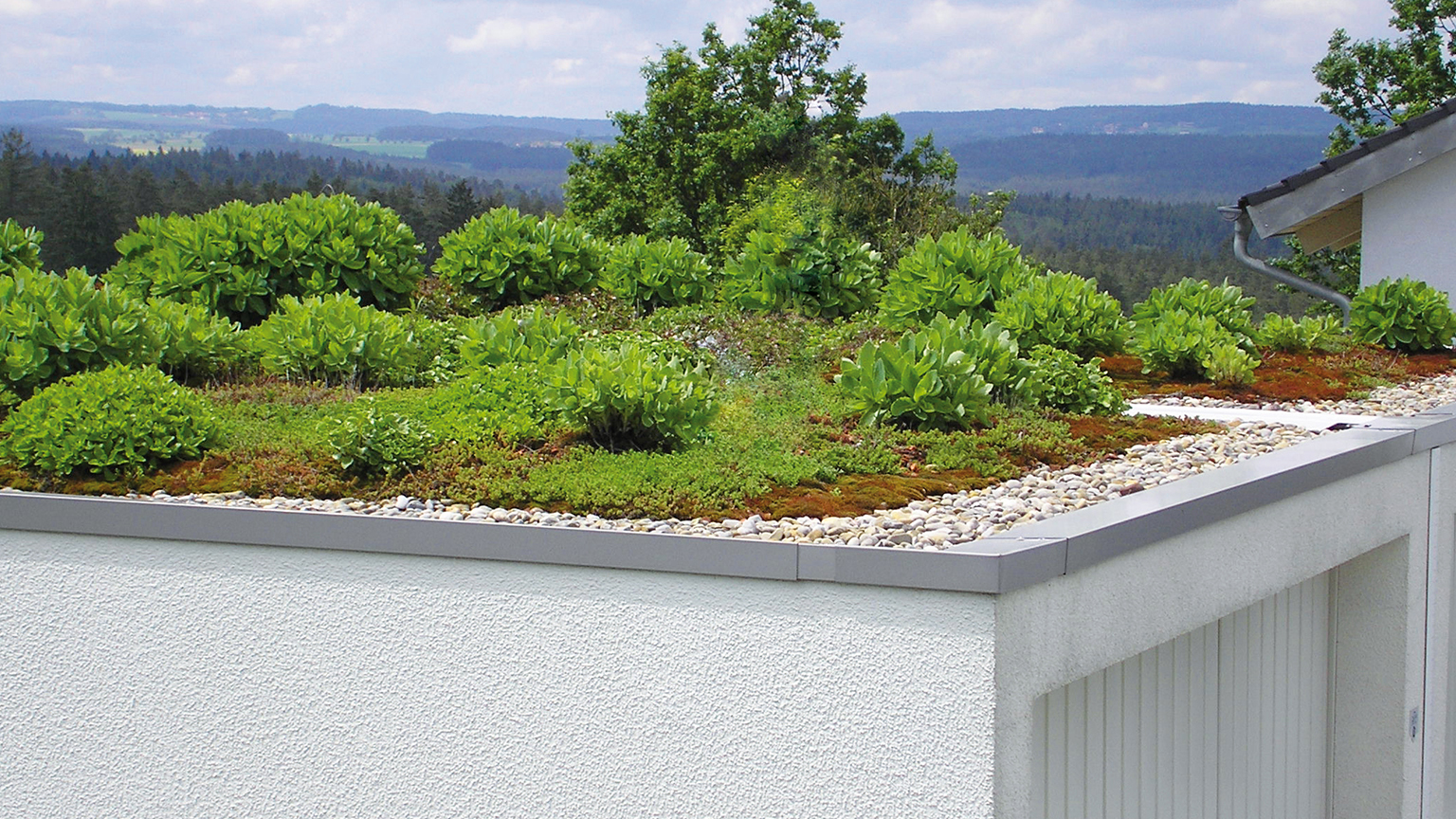
Plants that can cope with little water, plenty of sun, and wind are suitable for a garage roof. Sedum serves as the robust foundation. These plants store water in their leaves, grow low to the ground, and cope well with dry spells. That is why a sedum roof on the garage is a popular and proven solution.
In addition, low-growing grasses, wild herbs, and flowering plants can be used. They provide more structure, more color, and more biodiversity. A bee-friendly roof is created above all when you don’t just create a monotonous surface, but combine different flowering times and plant species.
The selection always depends on the location. A sunny, windy garage roof requires different plants than a partially shaded roof surface. The depth of the substrate also plays a role. The thinner the layer, the more robust and drought-tolerant the plants must be.
A green garage roof can also be a real eye-catcher. From the balcony, the home office, or the garden, you no longer look out at a bare roof surface, but at living plants. This visually enhances the garage and integrates it better into the garden design.
How much does it cost to green a garage roof?
The cost of greening a garage roof depends heavily on whether you do the work yourself or hire a specialist company. For a simple extensive green roof, the pure DIY material costs are roughly 50 to 100 euros per square meter, according to the Consumer Advice Center of North Rhine-Westphalia. However, this does not automatically include all additional work.
A professional contractor is more expensive but offers planning, installation, and coordination of the individual layers all under one roof. The costs then depend on roof size, access, waterproofing, root protection, substrate depth, planting system, drainage, and safety requirements.
Anyone planning a roof garden on a garage should check the structural requirements in addition to the pure material costs. Especially with a precast concrete garage, a green roof can help enhance the garage’s appearance and integrate it more harmoniously into the property. Even as part of a modern garden design with a garage, a green roof can serve as a design element that visually connects the house, garden, and garage.
Additional costs should also be taken into account. These include a structural analysis, potential work on the waterproofing, edge profiles, gravel strips, fall protection, transportation, and future maintenance. Those who plan the greening directly during the construction of a new garage can address some of these issues more easily and cleanly. This also supports the goal of designing the house and garage in a sustainable manner.
A green roof can also be an interesting alternative to a carport if, instead of an open shelter, a closed garage with additional ecological and aesthetic benefits is desired.
How does a garage with a green roof become part of the garden?
A green garage roof can visually connect the garage more closely with the garden. This is a major advantage, especially for properties with limited green space. The garage is seen not only as a parking space for the car, but also as part of the property’s ecological design.
A green roof pairs well with wood, natural stone, planters, vertical gardens, or modern outdoor lighting. This creates a harmonious overall look. Even in the front yard, a garage with a green roof can appear much more inviting than a plain concrete or gravel surface.
For many homeowners, the lifestyle aspect also plays a role. More nature in a small space, a climate-friendly home, and a bee-friendly front yard fit well with modern garden design. The green roof is a kind of “urban gardening light”: it creates greenery without taking up additional garden space
.
What mistakes should be avoided when greening a garage roof?
The biggest mistake is failing to check the structural integrity. Depending on its construction and water retention, a green roof can become heavy. Therefore, substrate should never simply be placed on the roof without first determining its load-bearing capacity.
Another mistake is using regular potting soil. It is not suitable for green roofs because it retains too much water, becomes too heavy, and can hinder drainage. It is better to use special roof substrate that is tailored to the requirements of a green roof.
Concealed drains are also problematic. Drainage points must remain unobstructed and be checked regularly. Otherwise, water cannot drain safely. Likewise, plants that are too heavy or have deep roots should not be chosen if the roof was not designed for them.
Maintenance is also often underestimated. Even a low-maintenance green roof requires monitoring. And when it comes to grants: first get informed, then apply, then implement.
Frequently Asked Questions
Not every garage roof is automatically suitable. Anyone wishing to turn a flat roof into a green roof should have the key requirements checked beforehand. The most important factors are structural integrity, waterproofing, drainage, and the overall condition of the roof. A green flat roof can enhance the appearance of the garage while also making an important contribution to the more sensible use of impervious surfaces.
Suitable plants for garage roofs are primarily sedum species, drought-tolerant herbs, low-growing grasses, and hardy flowering plants. These plants cope well with sun, wind, and occasional drought. This way, the garage roof can become a small green oasis that blends harmoniously into the garden.
Maintenance for an extensive green roof is usually manageable. As a rule, one to two maintenance sessions per year are sufficient. Regular maintenance includes, for example, removing unwanted plants, checking drainage, and re-fertilizing if necessary. Additional watering may be required during the initial growth phase.
There are various types of green roofs. Extensive greening is lighter, requires less maintenance, and is the right solution for many garage roofs. Intensive greening is more complex, heavier, and more comparable to a rooftop garden. Which option is suitable always depends on the load-bearing capacity, the structure, and the planned use.
A green garage roof can enhance the garage's appearance, retain rainwater, and improve the microclimate on the property. Additionally, a green roof can help store rainwater on the property and offset sealed surfaces. This makes it one of the ways to make your home, garden, and garage more sustainable.
Who benefits from a green garage roof?
A green garage roof is particularly worthwhile for homeowners who want to combine functionality, aesthetics, and sustainability. It transforms an unused roof area into a living space and significantly enhances the value of the garage.
This solution is particularly practical for a new prefabricated garage. In that case, structural engineering, waterproofing, roof construction, and drainage can be planned to fit perfectly from the start. The result is a garage that is not only practical but also better suited to the house, the garden, and a climate-friendly property.
Anyone wishing to green their garage roof should therefore plan early and have a professional assess which solution is best suited. An extensive green roof with sedum, herbs, and grasses is a good choice for many garages. It offers significant benefits, remains manageable in terms of effort, and turns the garage into a sustainable eye-catcher.
Legal Notice: The information in this article is provided for general informational purposes only and does not constitute binding technical advice. The suitability of a garage door opener depends on the specific conditions of your garage, the door, and the structural situation. ZAPF Garagen generally recommends having a qualified professional inspect the site before installation. Technical specifications for third-party products are based on generally available information and have not been confirmed by the respective manufacturers.
Configure your garage in 3D now and experience it virtually on your own property!
With our garage configurator, you can easily and intuitively put together the size, features, doors, windows, and extras in just a few steps. We will then arrange a non-binding consultation appointment with you, on the basis of which you will receive an individual quote, naturally at a fair price and with no obligation to purchase. Experience your configured garage in impressive 3D visualization during the non-binding consultation appointment.