

Additional costs associated with garages: What owners need to know
A garage has many advantages. It provides a protected space for your car. It also offers additional storage space. This makes everyday life more convenient. However, many owners focus primarily on the purchase price. What is often forgotten is that a garage incurs various additional costs – both one-time and ongoing. This article provides a clear overview of the costs that can arise and what owners should be aware of.
One-time additional costs before construction
Even before a garage is built, initial costs are incurred. These depend on the municipality, the state, the type of garage, and local conditions.
Permit fees: Whether a building permit is required for a garage is decided by the respective state and local building authority.
If a permit is required, fees will be incurred, the amount of which may vary depending on the region. In addition, there may be costs for drawings or building applications if these are prepared by an external office.
Earthworks and foundations: Every garage needs a stable foundation. This usually includes:
- Excavation work
- Gravel and substructure
- Concrete slab or point foundations
This work often incurs several costs, e.g., disposal of excavated material or access costs for machinery. Even though prefabricated garages are often quick to assemble, owners must factor in these preparatory costs. Unlike other prefabricated garage suppliers, ZAPF offers a foundation service and will create its own foundations on request.
Additional costs during assembly
On the day of assembly, costs may arise that many people do not consider.
Travel and delivery costs: A special truck or crane is often required for large components or a complete prefabricated concrete garage. In most cases, assembly is possible with our special KTM vehicle.
This may incur delivery and travel costs, which depend on:
- Distance
- Road conditions
- Necessary closures or no-stopping zones
Additional work: If the subsoil is different than expected during installation, additional costs may be incurred.
Examples:
- Refinishing the foundation
- Additional waterproofing
- Adjustment to a slope
- These points cannot always be foreseen, which is why owners should allow for some financial leeway.

Don’t miss out on any more information!
Don’t want to miss out on creative ideas for your garage? Whether it’s clever uses, new products, or exclusive promotions, our ZAPF newsletter will keep you one step ahead. Get regular inspiration delivered straight to your inbox and stay up to date on how versatile a ZAPF garage can really be. Simply sign up and become part of our community – it’s easy and, of course, free of charge.
Ongoing garage running costs
Once you start using your garage, there are various regular costs to consider. Some of these are small, while others can add up significantly over the years.
Electricity costs: If your garage is lit or has an electric door, there will be ongoing electricity costs.
Typical electricity consumers are:
- LED or neon lighting
- Door drive
- Motion detectors
- Sockets (e.g., for tools or e-bikes)
Modern LEDs consume little electricity, but if used regularly, the costs should be taken into account.
Maintenance and care: To enjoy your garage for a long time, care and minor maintenance are advisable. These do not incur high costs, but they do add up over the years.
Examples:
- Lubricating the garage door
- Replacing light bulbs
- Cleaning drains or gutters
- Checking the waterproofing of flat roofs
Regular maintenance is particularly important for garage doors to ensure that they function safely and reliably.
Insurance: Many home insurance policies cover garages, but not all—and some only under certain conditions.
Depending on the type of insurance, additional premiums may apply if the garage is considered a separate part of the building or is located further away from the house. Home contents insurance also plays a role. If items are stored in the garage, it should be clarified whether they are covered in the event of damage.
Tax-related incidental costs
Some garages may be subject to property tax. This applies in particular to garages that are directly attached to the property. Whether and how much tax is payable depends on the federal state and the valuation of the property. It may therefore be advisable to check with your tax advisor or the tax office to find out how your garage is classified.
Possible modernization costs
After a few years, many owners decide to modernize or expand their garages. This work incurs additional costs that are not always planned in advance.
Installation of an electric door: If you initially built your garage with a manual door, you may want to retrofit an electric door later on.
This will incur costs for: door drive, electrical system, and any structural modifications.
Replacement of lighting or windows: Modern lighting systems or larger windows provide more comfort, but involve material and labor costs. Insulation and sealing: If the garage is used more as a storage room or if adjacent rooms need to be protected, insulation measures may be worthwhile. Retrofitting better sealing against moisture can also be useful, especially in older garages.
Costs related to the property
A garage often also affects the property itself. This can result in additional expenses.
Paving or driveway: A stable driveway is needed to ensure that the car can safely enter the garage. Depending on the material and area, paving work can vary greatly.
Drainage: Sometimes additional drainage must be installed, e.g., in the form of gutters or drains. This incurs both material and installation costs.
Unforeseen additional costs
Even with good planning, unforeseen costs can always arise – for example, due to:
- Subsequent repairs
- Settlement cracks in the floor
- Damage caused by weather or hail
- Replacement of components
It is therefore advisable to set aside a small budget for such cases.
Well-informed owners save money in the long term
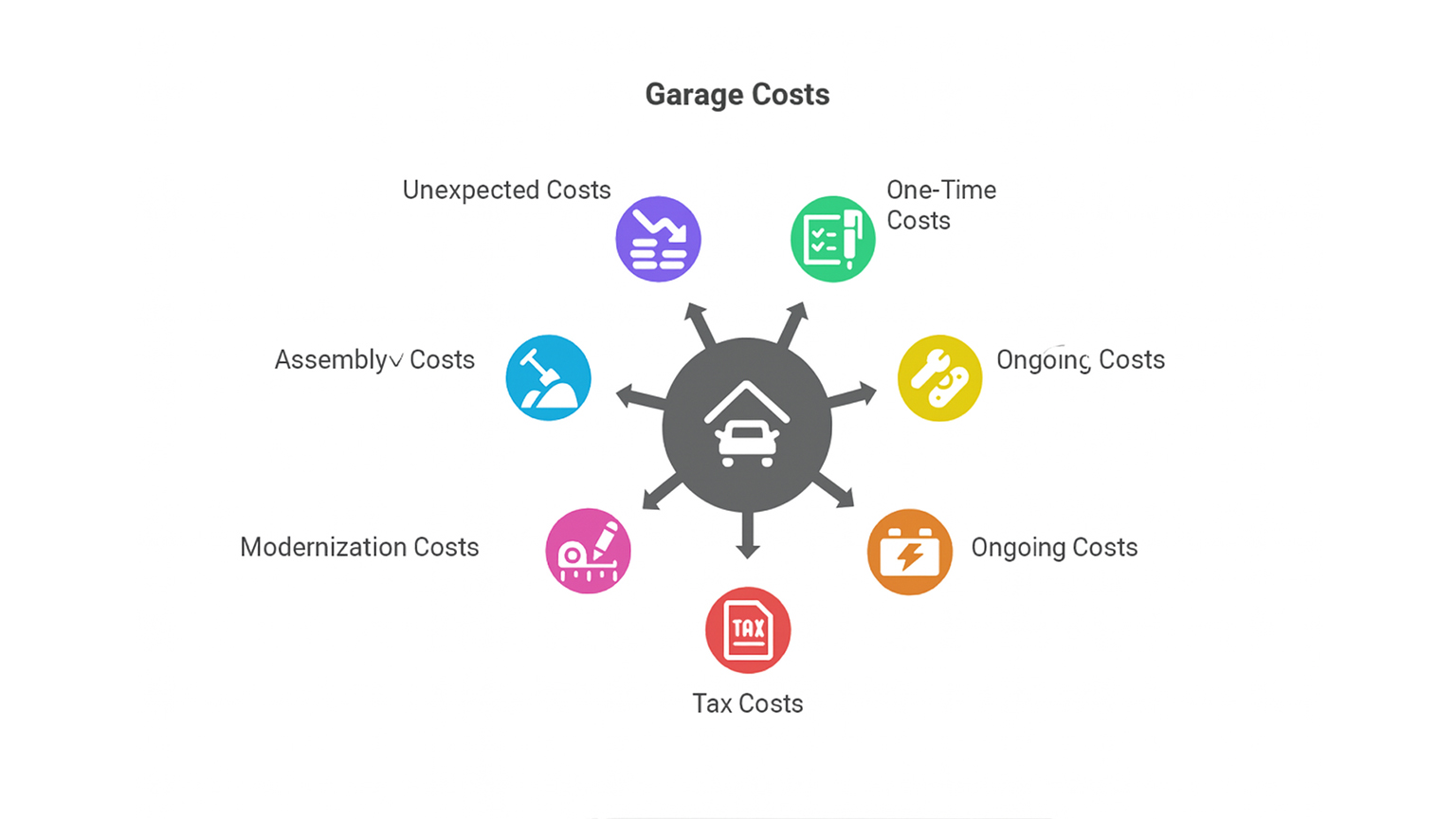
The ancillary costs associated with a garage consist of many individual components. Some are one-off costs, others are regular. If you take all these points into account at an early stage, you can avoid unpleasant surprises and plan better.
A garage is a long-term investment – and knowing the ancillary costs has many advantages: greater security, better maintenance, and a realistic view of the overall budget.
Configure your garage in 3D now and experience it virtually on your own property!
With our garage configurator, you can easily and intuitively put together the size, fittings, doors, windows, and extras in just a few steps. We will then arrange a non-binding consultation appointment with you, on the basis of which you will receive an individual quote, naturally at a fair price and with no obligation to buy. Experience your configured garage in impressive 3D visualization during the non-binding consultation appointment.